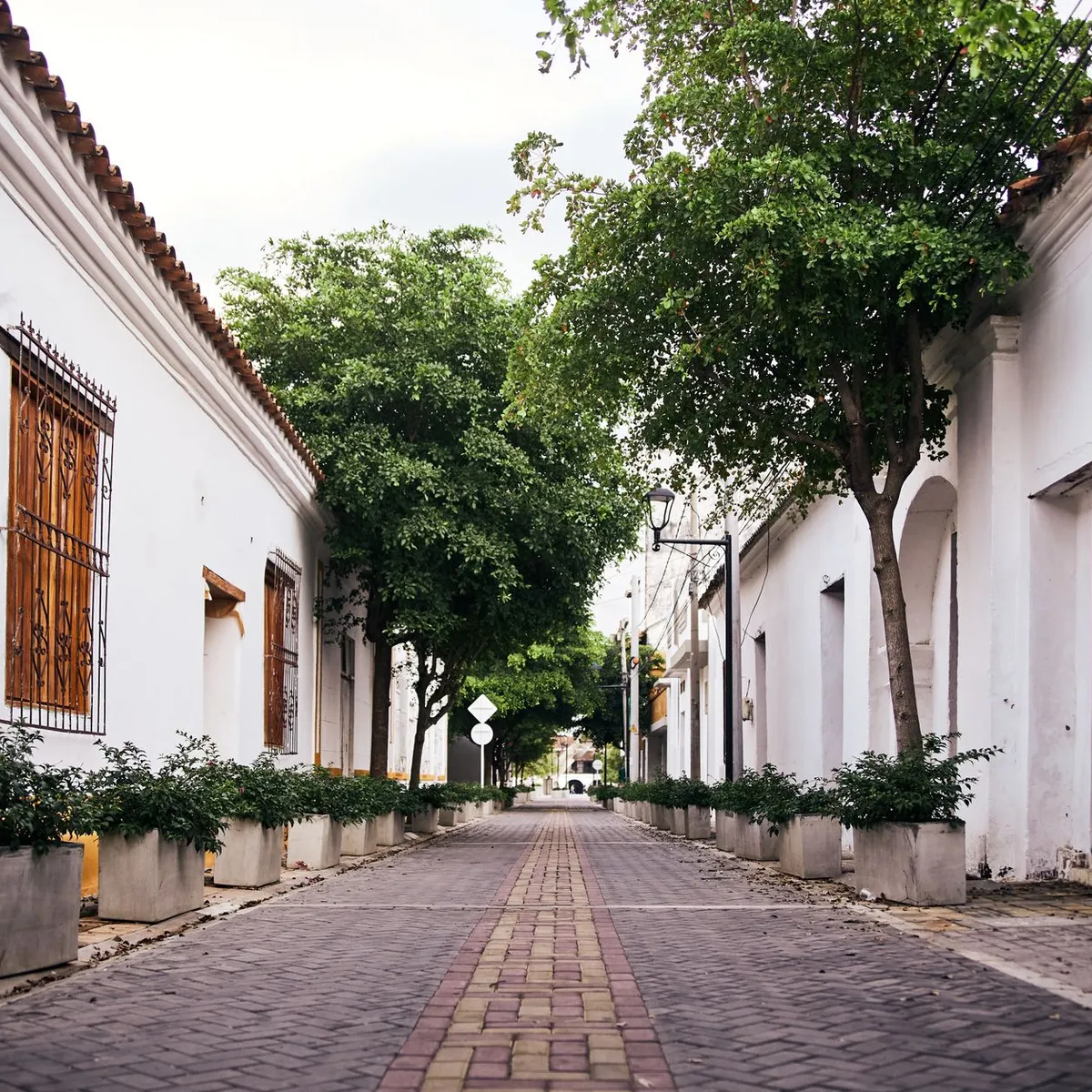
 Photo: Daniel Cely / Pexels
Santa Marta
Santa Marta accessibility for wheelchair users
Compare Santa Marta by accessibility, transport, terrain, healthcare, cost, weather, laws, reviews, and community notes.
Santa Marta accessibility scores
Compare Santa Marta by accessibility, transport, terrain, healthcare, cost, weather, and laws. General stats use public data and models. Community rows reflect member reviews and votes.
General stats
National benchmarks and estimates — your experience in this city may differ.
Community
Starts from our estimate — thumbs up nudge toward Excellent, down toward Poor. Reviews use 1–5 stars.
These figures combine public statistics, models, and live weather where available. Every city is different — treat this as a guide, and share what you know in the Reviews & Corrections tab.
Profile last updated 7/1/2026.
Santa Marta wheelchair accessibility guide
Research Santa Marta for wheelchair users and caregivers: getting around, terrain, healthcare, costs, climate, accessible things to do, and practical caveats before booking.
Last updated 7/1/2026At a glance
Santa Marta is a warm Caribbean base with beautiful waterfront scenery, but it is not an easy default for wheelchair users. The live city profile scores accessibility at 46/100 and shows very hilly surrounding terrain, low pavement-tag confidence, and only modest transport reliability. Treat it as a plan-ahead destination: workable for travelers who can choose a step-free hotel near the bay or El Rodadero, arrange point-to-point taxis, and keep beach or park outings flexible. DB cost guidance puts a monthly stay from ~$1,962/mo, with housing from ~$771/mo.
Getting around
Use door-to-door taxis or prearranged private transfers as the main mobility strategy. Public buses and colectivos are useful for locals but are not a dependable wheelchair option, and curb ramps can be inconsistent outside newer commercial strips. If arriving by air, confirm vehicle height, luggage help, and whether your accommodation can receive you without steps. For Tayrona or coastal day trips, ask operators about vehicle access, boarding surfaces, and whether any beach segment requires sand, stairs, or a boat transfer.
Terrain & mobility
The historic center and bayfront are the easiest areas to trial first, but Santa Marta sits between coast and steep mountain terrain. The live terrain profile flags “Very Hilly,” a 13.2% maximum sampled grade, and a large elevation range; the pavement profile has low confidence and only 12% good tagged surface. Expect broken sidewalks, ramps blocked by parked vehicles, heat-softened outdoor pacing, and sudden steep sections away from the water. A manual chair user will likely want a companion for longer crossings.
Healthcare & care
The local profile lists several central healthcare leads, including Clínica La Milagrosa, Hospital Universitario Julio Méndez Barreneche, Clínica Mar Caribe, Clínica Bahía, and Sanitas EPS. These are OpenStreetMap-derived leads, not access guarantees, so verify emergency intake, elevators, imaging access, and English-language support directly. For longer stays, arrange medication continuity before arrival and identify a private clinic plus a public emergency option.
Costs & housing
Santa Marta can be cheaper than larger Colombian tourist hubs, but accessible housing narrows quickly. Budget from ~$1,962/mo overall, with housing from ~$771/mo, transport from ~$183/mo, medical from ~$130/mo, and home aid from ~$437/mo. Prioritize newer apartment buildings with elevators, backup power, level showers, and reliable air-conditioning. Ask for current photos of the building entrance, bathroom threshold, elevator dimensions, and the route from street to lobby.
Climate & comfort
The climate is hot, humid, and sunny, with rainier months that can worsen drainage and curb cuts. Plan outdoor time early in the morning or near sunset, carry water, and choose lodging with dependable cooling. Heat management matters as much as route planning here.
Accessible things to do
Museo del Oro Tairona / Casa de la Aduana— a central museum anchor in a restored historic building; verify current lift/step-free route and accessible restroom status before visiting.
Santa Marta bayfront and Parque de los Novios area— useful for a short, low-commitment roll or taxi drop-off, though curb cuts and crowding vary by block.
Quinta de San Pedro Alejandrino— a major Bolívar history site with gardens and museum areas; confirm path surfaces and step-free access because historic estates often mix ramps, gravel, and thresholds.
El Rodadero waterfront— a practical coastal outing if your hotel or taxi drop-off is near a paved section; beach sand and boat excursions are the main barriers.
Community & language
Spanish is essential for healthcare, transport, and housing checks. Tourism providers may know basic English, but accessibility details are easier to confirm in Spanish with photos or video. Local life is friendly and coastal, yet disability-specific infrastructure is uneven.
Would we recommend it?
Yes for warm-weather travelers who can pay for transfers, choose lodging carefully, and accept limited independent rolling. No as a first-choice wheelchair city if you need reliable public transit, smooth sidewalks, or predictable access at beaches and historic sites.
These figures combine public statistics, models, and live weather where available. Every city is different — treat this as a guide, and share what you know in the Reviews & Corrections tab.
Profile last updated 7/1/2026.
Reviews & corrections
Share your experience or suggest a data correction. Both appear publicly; admin updates official city scores and costs separately.
Log in to write a review or suggest a correction.
No reviews or corrections yet.