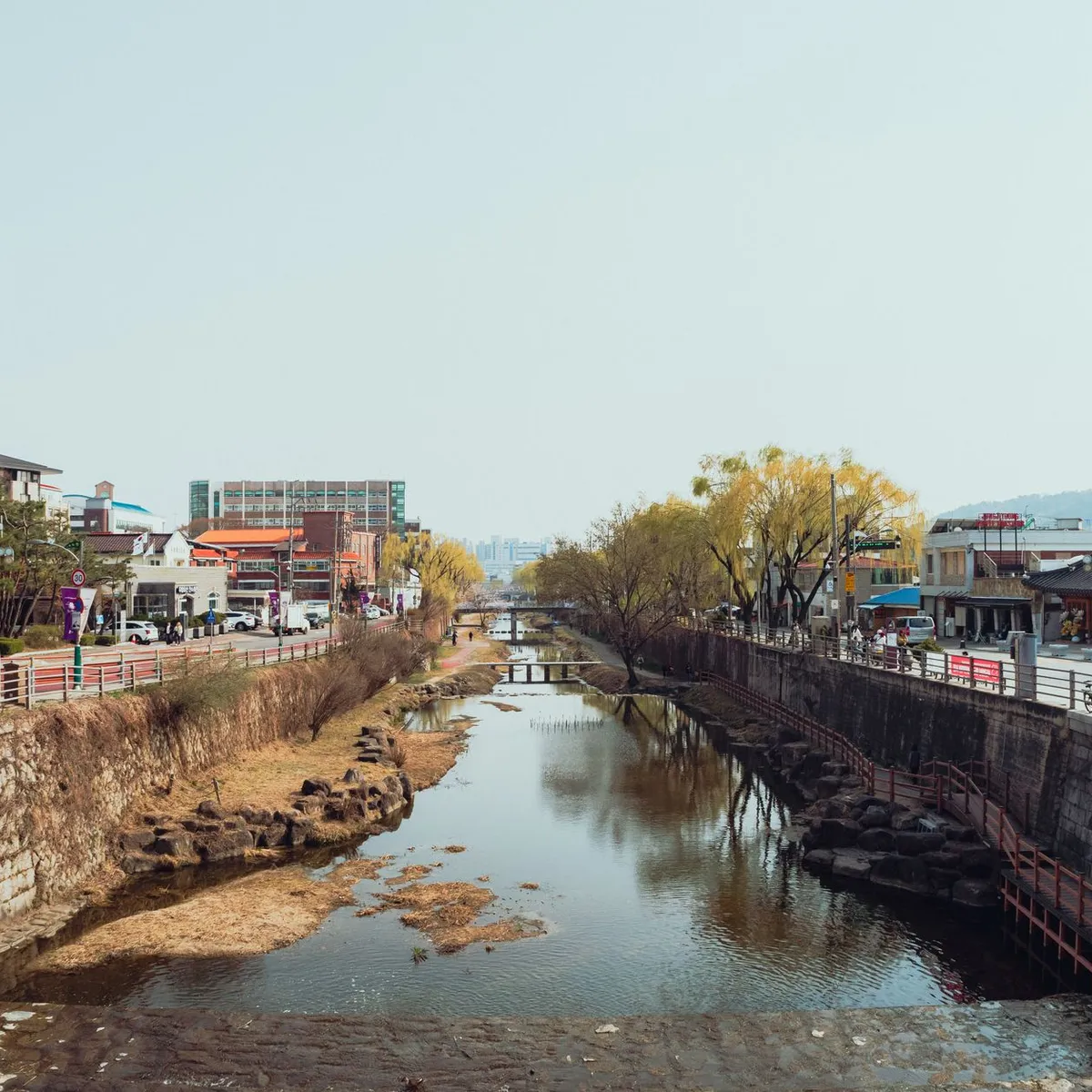
 Photo: Theodore Nguyen / Pexels
Seongnam-si
Seongnam-si accessibility for wheelchair users
Compare Seongnam-si by accessibility, transport, terrain, healthcare, cost, weather, laws, reviews, and community notes.
Seongnam-si accessibility scores
Compare Seongnam-si by accessibility, transport, terrain, healthcare, cost, weather, and laws. General stats use public data and models. Community rows reflect member reviews and votes.
General stats
National benchmarks and estimates — your experience in this city may differ.
Community
Starts from our estimate — thumbs up nudge toward Excellent, down toward Poor. Reviews use 1–5 stars.
These figures combine public statistics, models, and live weather where available. Every city is different — treat this as a guide, and share what you know in the Reviews & Corrections tab.
Profile last updated 6/30/2026.
Seongnam-si wheelchair accessibility guide
Research Seongnam-si for wheelchair users and caregivers: getting around, terrain, healthcare, costs, climate, accessible things to do, and practical caveats before booking.
Last updated 6/30/2026At a glance
Seongnam-si sits just southeast of Seoul and is best understood as a modern suburban/urban base with parks, arts venues and access to nearby mountain heritage. The DB profile estimates from ~$2,744/mo, with high infrastructure and wheelchair-transport scores, but terrain is mixed and local slopes matter. For wheelchair users, Bundang/Pangyo-style districts are much easier than hillside or fortress outings. Treat the city as a practical base with selected accessible outings, not as a compact sightseeing district where every attraction can be linked on foot.
Getting around
Seongnam has strong rail and bus links into Seoul and across Gyeonggi, but station choice matters. Confirm elevators at the exact Bundang, Pangyo or Moran-area station you plan to use. Local buses are extensive but can be tiring with transfers; taxis or accessible taxis are better for parks, hospitals and Namhansanseong-area trips. Keep a backup route because Seoul-area elevators can be out of service.
Terrain & mobility
The DB terrain profile flags mixed terrain with steep sampled grades and a wide elevation range. Newer business/residential zones have broader pavements, while older districts and mountain edges can become steep quickly. OSM pavement confidence is low, with asphalt, cobblestone and ground tags mixed in; treat park paths and heritage approaches as route-specific checks.
Healthcare & care
OSM healthcare leads in the DB include hospitals/clinics within roughly 6-13 km, but they are not accessibility guarantees. Seongnam's proximity to Seoul is a major advantage for specialist care, repairs and personal assistance. Confirm wheelchair entrance, elevator access and language support before relying on any single provider.
Costs & housing
The database estimate is from ~$2,744/mo, with housing around ~$1,148/mo. Newer high-rise apartments and serviced residences near rail may be workable, but bathroom layouts and building thresholds still need photos. Being near Pangyo/Bundang transit can reduce taxi dependence.
Climate & comfort
Expect Seoul-area summers: humid, rainy and draining for long outdoor rolls. Winters can bring ice on slopes, especially near parks and hillside neighborhoods. Indoor cultural stops and mall/office-district breaks are useful comfort anchors.
Accessible things to do
Seongnam Arts Center— a major indoor performance/culture venue; confirm wheelchair seating, elevator routes and accessible restroom locations when booking.
Bundang Central Park— a large urban park option; use main paved paths and verify slope/restroom details rather than assuming all garden areas are step-free.
Yuldong Park— another established park/recreation area; best for a short, checked route with taxi drop-off, not a blind full-loop roll.
Namhansanseong Fortress area— a UNESCO mountain-fortress destination near Seongnam; rewarding but terrain-heavy, so wheelchair users should research accessible parking, shuttle/drop-off and visitor-center access before attempting it.
Community & language
Korean is the default. The Seoul metro area is easier than rural Korea for translation apps and services, but accessible taxi and medical arrangements are still smoother with Korean-language support.
Would we recommend it?
Yes as a practical Seoul-adjacent base, especially in newer districts. For sightseeing, choose modern parks and indoor venues first; treat fortress and hillside routes as assisted outings.
These figures combine public statistics, models, and live weather where available. Every city is different — treat this as a guide, and share what you know in the Reviews & Corrections tab.
Profile last updated 6/30/2026.