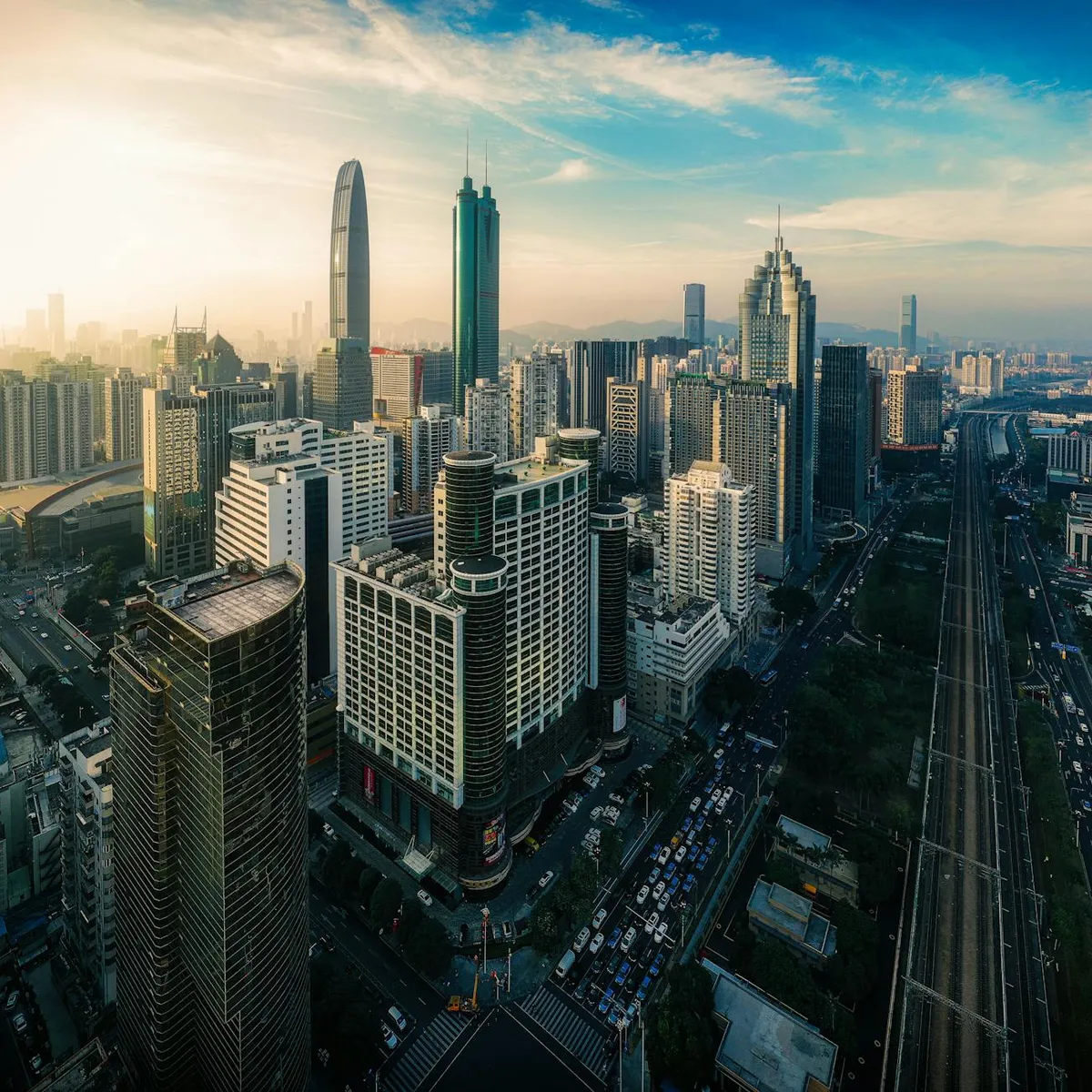
 Photo: 光曦 刘 / Pexels
Shenzhen
Shenzhen accessibility for wheelchair users
Compare Shenzhen by accessibility, transport, terrain, healthcare, cost, weather, laws, reviews, and community notes.
Shenzhen accessibility scores
Compare Shenzhen by accessibility, transport, terrain, healthcare, cost, weather, and laws. General stats use public data and models. Community rows reflect member reviews and votes.
General stats
National benchmarks and estimates — your experience in this city may differ.
Community
Starts from our estimate — thumbs up nudge toward Excellent, down toward Poor. Reviews use 1–5 stars.
These figures combine public statistics, models, and live weather where available. Every city is different — treat this as a guide, and share what you know in the Reviews & Corrections tab.
Profile last updated 6/30/2026.
Shenzhen wheelchair accessibility guide
Research Shenzhen for wheelchair users and caregivers: getting around, terrain, healthcare, costs, climate, accessible things to do, and practical caveats before booking.
Last updated 6/30/2026At a glance
Shenzhen is a modern, fast-moving megacity with newer infrastructure than many Chinese destinations, but wheelchair access still needs careful checking. RollVenture's live row shows a moderate overall score, strong safety score, high infrastructure score, and living costs from ~$2,872/mo. The best experience is likely around newer metro-linked districts, malls, waterfront promenades, and major parks rather than older urban villages or steep hillside areas.
Getting around
The metro is the core network and many newer stations are designed with elevators, but elevator location, maintenance, and station-to-street routing should be checked before relying on a transfer-heavy trip. Taxis and ride-hailing can work for manual chairs if the chair folds; power-chair users should arrange a van or hotel support. Crossings are often wide, so allow extra signal cycles and avoid rush-hour station crowds.
Terrain & mobility
The database terrain profile flags Shenzhen as very hilly, with pockets of flat urban fabric between ridges and parks. Pavement evidence is low-confidence, so treat smooth-looking central districts as more reliable than edge neighborhoods. Malls and waterfront areas can be easier than scenic hills, but ramps may be long and outdoor heat can drain batteries and stamina.
Healthcare & care
The local healthcare profile currently lists OSM-derived leads including Luohu People's Hospital and nearby community clinics. Treat those as nearby-care leads only: confirm wheelchair entrances, English or Mandarin support, specialist availability, payment rules, and whether a hospital is appropriate for emergency care before depending on it.
Costs & housing
Use from ~$2,872/mo as a planning baseline, with housing around ~$1,374. Newer serviced apartments near metro corridors are more likely to have elevators, level lobbies, and predictable bathrooms, but listings still need photos or video checks for thresholds, shower setup, bed height, and lift dimensions.
Climate & comfort
Shenzhen is hot, humid, and rainy for much of the year, with typhoon-season disruptions possible. Indoor routes through malls and metro-connected complexes can be a major comfort advantage. Carry rain protection for chair electronics and plan shorter outdoor segments.
Accessible things to do
Shenzhen Bay Park— waterfront promenades are a promising low-step option, though distances, heat, and toilet access should be checked locally.
OCT Loft / OCT area— a creative district and transit-linked cluster; individual venues may have thresholds, so verify ahead.
Lianhuashan Park lower areas— useful for city views and open space; avoid assuming hilltop paths are chair-friendly.
Window of the World— a major theme-park attraction listed in travel sources; request current wheelchair route and ride/show access details before booking.
Shopping malls in Futian or Nanshan— not classic sightseeing, but often the most reliable accessible rest-stop network for food, toilets, and weather breaks.
Community & language
Mandarin is the default, Cantonese also appears, and English is limited outside international hotels and technology districts. Have destination names in Chinese, screenshots of elevator entrances, and a hotel contact ready for drivers.
Would we recommend it?
Yes, cautiously, especially for travelers comfortable with large Asian cities and app-based logistics. Shenzhen's modern districts help, but hills, humidity, and variable access information make pre-planning essential.
These figures combine public statistics, models, and live weather where available. Every city is different — treat this as a guide, and share what you know in the Reviews & Corrections tab.
Profile last updated 6/30/2026.