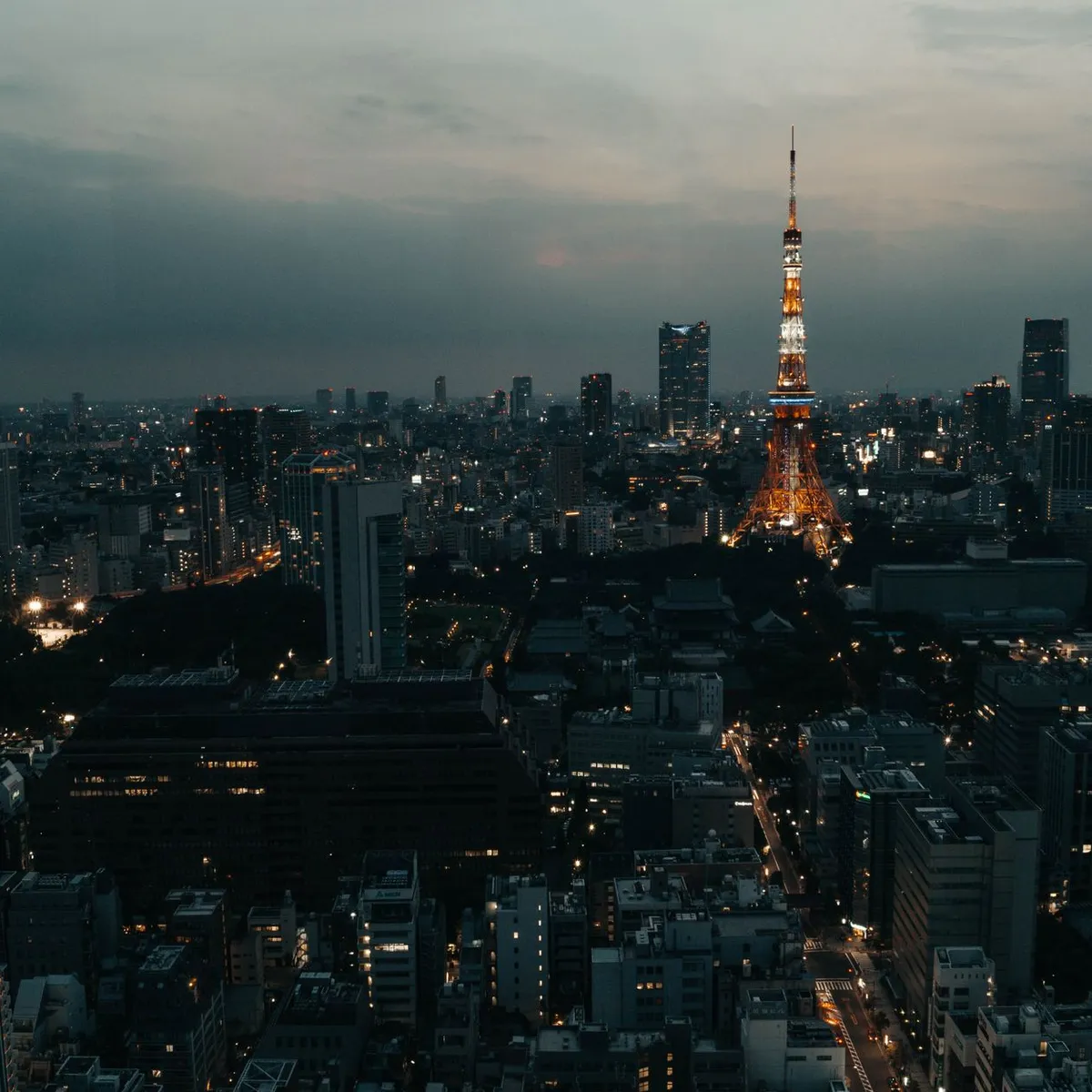
 Photo: MB Productions / Pexels
Tokyo
Tokyo accessibility for wheelchair users
Compare Tokyo by accessibility, transport, terrain, healthcare, cost, weather, laws, reviews, and community notes.
Tokyo accessibility scores
Compare Tokyo by accessibility, transport, terrain, healthcare, cost, weather, and laws. General stats use public data and models. Community rows reflect member reviews and votes.
General stats
National benchmarks and estimates — your experience in this city may differ.
Community
Starts from our estimate — thumbs up nudge toward Excellent, down toward Poor. Reviews use 1–5 stars.
These figures combine public statistics, models, and live weather where available. Every city is different — treat this as a guide, and share what you know in the Reviews & Corrections tab.
Profile last updated 6/30/2026.
Tokyo wheelchair accessibility guide
Research Tokyo for wheelchair users and caregivers: getting around, terrain, healthcare, costs, climate, accessible things to do, and practical caveats before booking.
Last updated 6/30/2026At a glance
Tokyo is one of the strongest big-city options for wheelchair users who can manage crowds and operational complexity. The city has deep transport, hotel, hospital, and visitor-service infrastructure, but stations are huge and the accessible route is often not the shortest route.
Getting around
Rail and subway should be planned station by station. Tokyo Metro publishes barrier-free facility pages showing whether a route from ground to gate to platform is available by elevator, slope, stairlift, or wheelchair-accessible escalator. Build in extra time for crowds, elevator waits, long transfers, and platform-ramp assistance.
Terrain & mobility
DB terrain marks the area as mostly flat, with sampled maximum grade around 0.8% and about 50 m elevation range. The OSM pavement sample is medium-confidence, with dominant surfaces including untagged, asphalt, paved, paving_stones; treat it as a routing lead, not a guarantee. Central Tokyo is often manageable, but station interiors, tactile paving, crowds, small restaurants, and older side streets can still create access friction.
Healthcare & care
The database healthcare profile lists St. Luke's International Hospital, Tokyo Metropolitan Bokutoh Hospital as curated-derived care leads; verify access, opening rules, language support, and urgency handling directly before relying on them. Use listed hospitals as starting points only: confirm department, language support, appointment rules, emergency procedure, and physical access before relying on a facility.
Costs & housing
The database estimate is **from ~$3,366/mo**. Accessible hotel rooms can be very specific in size and layout; request photos and measurements, and consider staying near a station with verified elevator routes rather than chasing the lowest nightly rate.
Climate & comfort
Tokyo has humid summers, a rainy season, and typhoon risk. Heat management, shade, elevator access inside stations, and backup taxi plans matter in summer; winter is generally easier but still requires rain planning.
Accessible things to do
Tokyo Metro station network— Barrier-free station pages are practical planning tools for building accessible sightseeing routes; verify the exact entrance and exit, not just the station name.
Ueno, Asakusa, Marunouchi/Tokyo Station routes— These central districts are common accessible-travel leads, but each temple, museum, garden, or restaurant still needs its own entrance and toilet check.
Community & language
Japanese is essential for many small businesses, while English is stronger in major hotels, hospitals, stations, and tourist sites. Save written Japanese access requests and hotel addresses for taxi or station staff.
Would we recommend it?
Yes, strongly, for wheelchair users comfortable with detailed route planning. Tokyo rewards preparation; improvisation is harder because transfers and crowds can be intense.
These figures combine public statistics, models, and live weather where available. Every city is different — treat this as a guide, and share what you know in the Reviews & Corrections tab.
Profile last updated 6/30/2026.