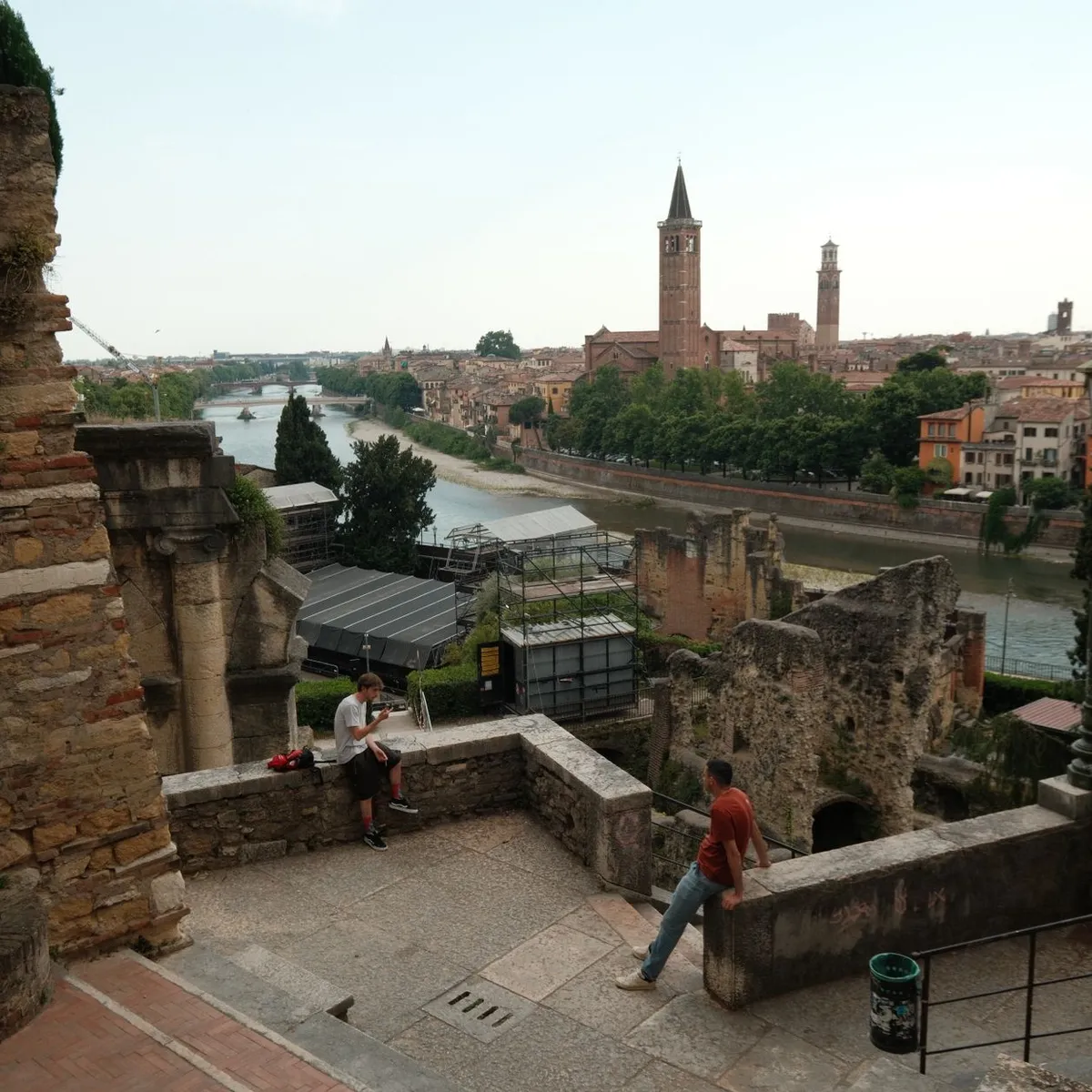
 Photo: Gökberk Keskinkılıç / Pexels
Verona
Verona accessibility for wheelchair users
Compare Verona by accessibility, transport, terrain, healthcare, cost, weather, laws, reviews, and community notes.
Verona accessibility scores
Compare Verona by accessibility, transport, terrain, healthcare, cost, weather, and laws. General stats use public data and models. Community rows reflect member reviews and votes.
General stats
National benchmarks and estimates — your experience in this city may differ.
Community
Starts from our estimate — thumbs up nudge toward Excellent, down toward Poor. Reviews use 1–5 stars.
These figures combine public statistics, models, and live weather where available. Every city is different — treat this as a guide, and share what you know in the Reviews & Corrections tab.
Profile last updated 6/30/2026.
Verona wheelchair accessibility guide
Research Verona for wheelchair users and caregivers: getting around, terrain, healthcare, costs, climate, accessible things to do, and practical caveats before booking.
Last updated 6/30/2026At a glance
Verona is beautiful, compact, and culturally rich, but it is not an effortless wheelchair city. The official Visit Verona tourism site confirms the city as a major heritage destination, and the DB profile shows strong infrastructure but a very hilly terrain sample and historic surfaces including sett and paving stones. Think of Verona as a rewarding slow-travel base if you choose accommodation carefully, pre-check museum entrances, and plan short routes instead of expecting free-form wandering. Estimated costs start around ~$3,078/mo, with housing around ~$1,419/mo.
Getting around
Verona Porta Nuova is the main rail gateway and is normally the best arrival point to request station assistance. Inside the city, buses help for longer hops, but old-town access is easier when you cluster activities near Piazza Bra, Castelvecchio, and the river. For wheelchair users, the biggest transport issue is not distance; it is the combination of stone paving, narrow sidewalks, bridge approaches, and crowds around the Arena. Keep taxi numbers and hotel reception support as backup for evenings.
Terrain & mobility
The live DB terrain profile flags Verona as very hilly, with an 8.1% sampled maximum grade and a 417 m elevation range in the wider sample. The historic center itself has manageable flat stretches, but paving quality changes quickly. OSM pavement confidence is high and mostly good, yet sett and paving-stone surfaces can still be tiring for manual chairs. Larger wheels, gloves, and a companion for bridge ramps or cobbled shortcuts can make the difference.
Healthcare & care
DB healthcare leads include AULSS 9 Scaligera, Policlinico Giambattista Rossi with emergency services, Centro Atlante, and the UILDM-linked rehabilitation outpatient center. These are leads, not access guarantees. Verona's regional hospital network is a plus for scheduled care, but confirm step-free entry, accessible toilets, and appointment language support. If you need respiratory, neuromuscular, or rehab continuity, contact providers before booking accommodation.
Costs & housing
Verona is not cheap by RollVenture standards. Budget from ~$3,078/mo and expect central step-free apartments to cost more than suburban listings. Many charming old buildings have stairs before the lift, tiny elevators, or bathrooms retrofitted without turning space. Ask for video from street to bed, lift dimensions, shower threshold photos, and whether taxis can stop at the door during restricted-traffic hours.
Climate & comfort
Summers are warm and humid, with heat held by stone streets and crowded event nights around the Arena. Winters are cooler and damp rather than severe, but wet stone surfaces can be slippery. Spring and autumn are the most comfortable seasons for rolling, especially if you avoid peak opera-event crowding.
Accessible things to do
Arena di Verona— the Roman amphitheatre is the headline sight; book accessible seating or visitor access directly and expect crowds around Piazza Bra.
Castelvecchio Museum and bridge area— an important museum and landmark; verify current accessible route details because historic floors and bridge approaches vary.
Piazza Bra and Via Mazzini— central, scenic, and practical for a short roll, though paving and tourist crowds can slow progress.
Adige riverside viewpoints— good for lower-effort sightseeing when you choose flatter sections and avoid steep bridge approaches.
Community & language
Italian is the default, but tourism staff often speak English. Accessibility vocabulary is easier if you use direct phrases: senza gradini, ascensore, bagno accessibile, larghezza porta. Verona is used to visitors, but not every host understands wheelchair access beyond “there is a lift.”
Would we recommend it?
Yes for culture-focused wheelchair users who can handle historic-surface friction and pre-book carefully. Verona is less suitable for someone who needs smooth, predictable independent rolling all day, but it can be excellent for a short, well-planned stay around the historic core.
These figures combine public statistics, models, and live weather where available. Every city is different — treat this as a guide, and share what you know in the Reviews & Corrections tab.
Profile last updated 6/30/2026.