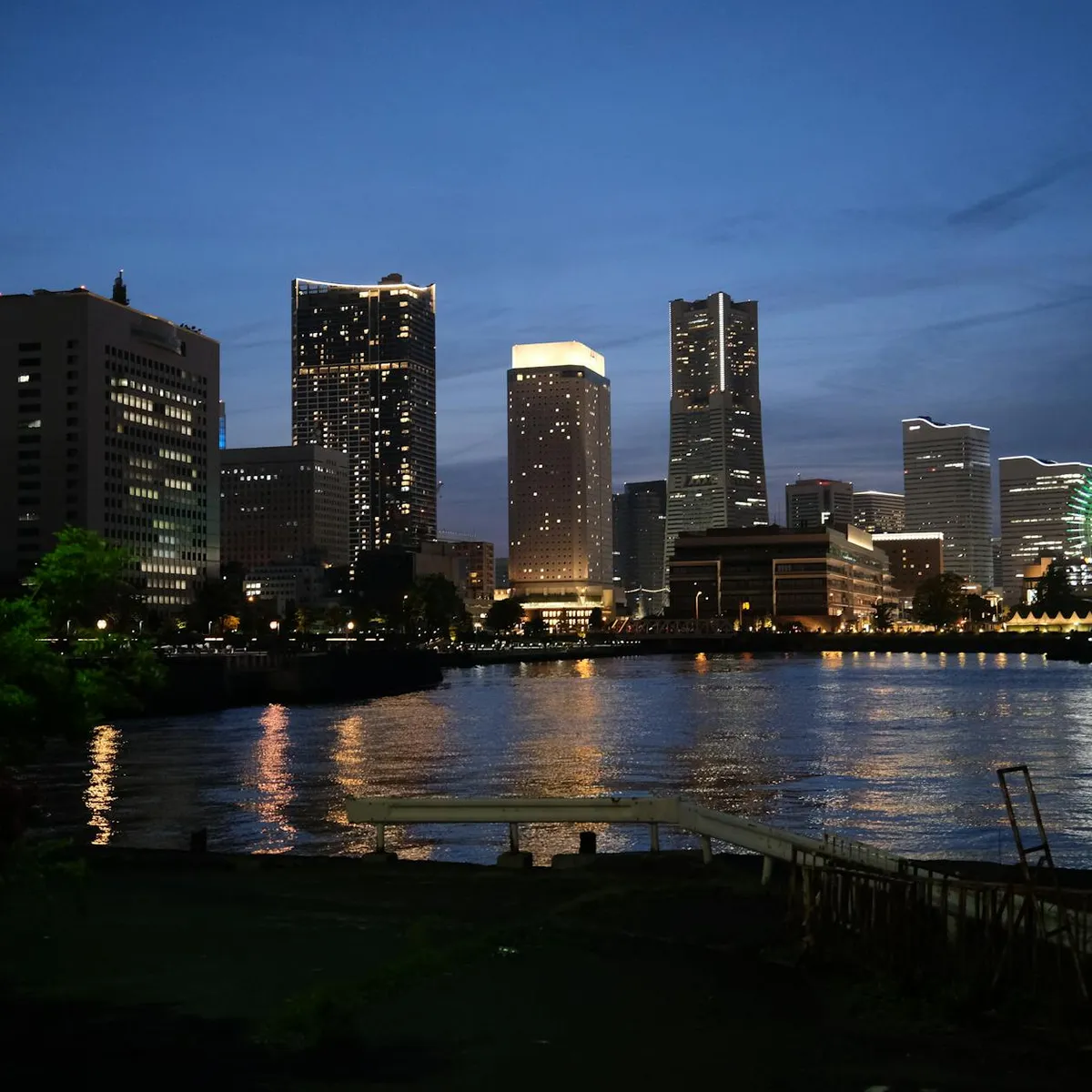
 Photo: Huu Huynh / Pexels
Yokohama
Yokohama accessibility for wheelchair users
Compare Yokohama by accessibility, transport, terrain, healthcare, cost, weather, laws, reviews, and community notes.
Yokohama accessibility scores
Compare Yokohama by accessibility, transport, terrain, healthcare, cost, weather, and laws. General stats use public data and models. Community rows reflect member reviews and votes.
General stats
National benchmarks and estimates — your experience in this city may differ.
Community
Starts from our estimate — thumbs up nudge toward Excellent, down toward Poor. Reviews use 1–5 stars.
These figures combine public statistics, models, and live weather where available. Every city is different — treat this as a guide, and share what you know in the Reviews & Corrections tab.
Profile last updated 6/30/2026.
Yokohama wheelchair accessibility guide
Research Yokohama for wheelchair users and caregivers: getting around, terrain, healthcare, costs, climate, accessible things to do, and practical caveats before booking.
Last updated 6/30/2026At a glance
Yokohama is a high-impact Japan pick for wheelchair users because it combines big-city rail, waterfront promenades, and several major attractions with clearer visitor information than many smaller rows still empty in the database. It is not effortless: stations are large, transfers can be long, and older hillside districts away from Minato Mirai can add slopes or narrow approaches.
Getting around
Plan around rail first. Yokohama Station, Sakuragicho, Minatomirai, Bashamichi, and Motomachi-Chukagai are the practical visitor anchors, and Japan Accessible Tourism Center describes Yokohama as a realistic accessible destination while still requiring route planning. Use station elevator maps, avoid tight transfer windows, and check the latest assistance process with the operator before long intercity trips.
Terrain & mobility
The database terrain profile is gently rolling, with all sampled points flat but a meaningful elevation range. The waterfront, Minato Mirai, Red Brick Warehouse area, and many newer station approaches are easier than Yamate, older shopping lanes, or garden approaches. The pavement profile is only medium-confidence, so treat OSM surface data as a lead rather than a guarantee.
Healthcare & care
The database healthcare leads are mostly OSM hospital entries spread across the wider city, including Kikuna Memorial Hospital and other hospitals or clinics; verify access, specialty, and emergency routing directly. Yokohama is close to Tokyo-level specialist care, but a visitor needing personal care, wheelchair repair, or English support should pre-book contacts rather than assuming same-day help.
Costs & housing
The database estimate is **from ~$4,014/mo**, with housing the largest line item. Accessible stays are most practical in newer hotels or serviced apartments around Minato Mirai, Yokohama Station, or Kannai, where lift access and step-free streets are easier to verify. Ask for bathroom photos, bed height, doorway width, and whether “barrier-free” means a true roll-in layout.
Climate & comfort
Summers are humid and hot enough to affect fatigue, batteries, and skin comfort, while typhoon-season rain can make ramps and tactile paving slippery. Winters are milder than northern Japan, but wind along the bay is noticeable. Indoor breaks around shopping malls and museums are useful in both summer heat and heavy rain.
Accessible things to do
Minato Mirai waterfront and Red Brick Warehouse area— The broad waterfront district is the simplest orientation route, with newer public space and many indoor rest stops; still verify event crowding and temporary ramps.
CUPNOODLES MUSEUM YOKOHAMA— The museum publishes visitor access information and is in the flat Minato Mirai/Shinko area, making it a stronger wheelchair lead than hillside sights.
Yokohama Landmark Tower / Sky Garden area— The Landmark complex is a major modern indoor anchor near Minato Mirai; confirm observatory elevator and ticketing details before visiting.
Sankeien Garden— The official garden access page is useful, but gardens can involve gravel, bridges, slopes, and seasonal surfaces, so treat it as a planned outing rather than a guaranteed easy roll.
Community & language
English is easier in hotels, stations, and major attractions than in small clinics or local restaurants. Carry Japanese notes for wheelchair dimensions, transfer needs, allergies, and emergency contacts. For longer stays, connect with disability travel communities before arrival.
Would we recommend it?
Yes, especially for wheelchair users who want a Japan city with strong transport, waterfront routes, and big-city services without staying in central Tokyo. Choose a modern waterfront base and verify every attraction’s current barrier-free route.
These figures combine public statistics, models, and live weather where available. Every city is different — treat this as a guide, and share what you know in the Reviews & Corrections tab.
Profile last updated 6/30/2026.