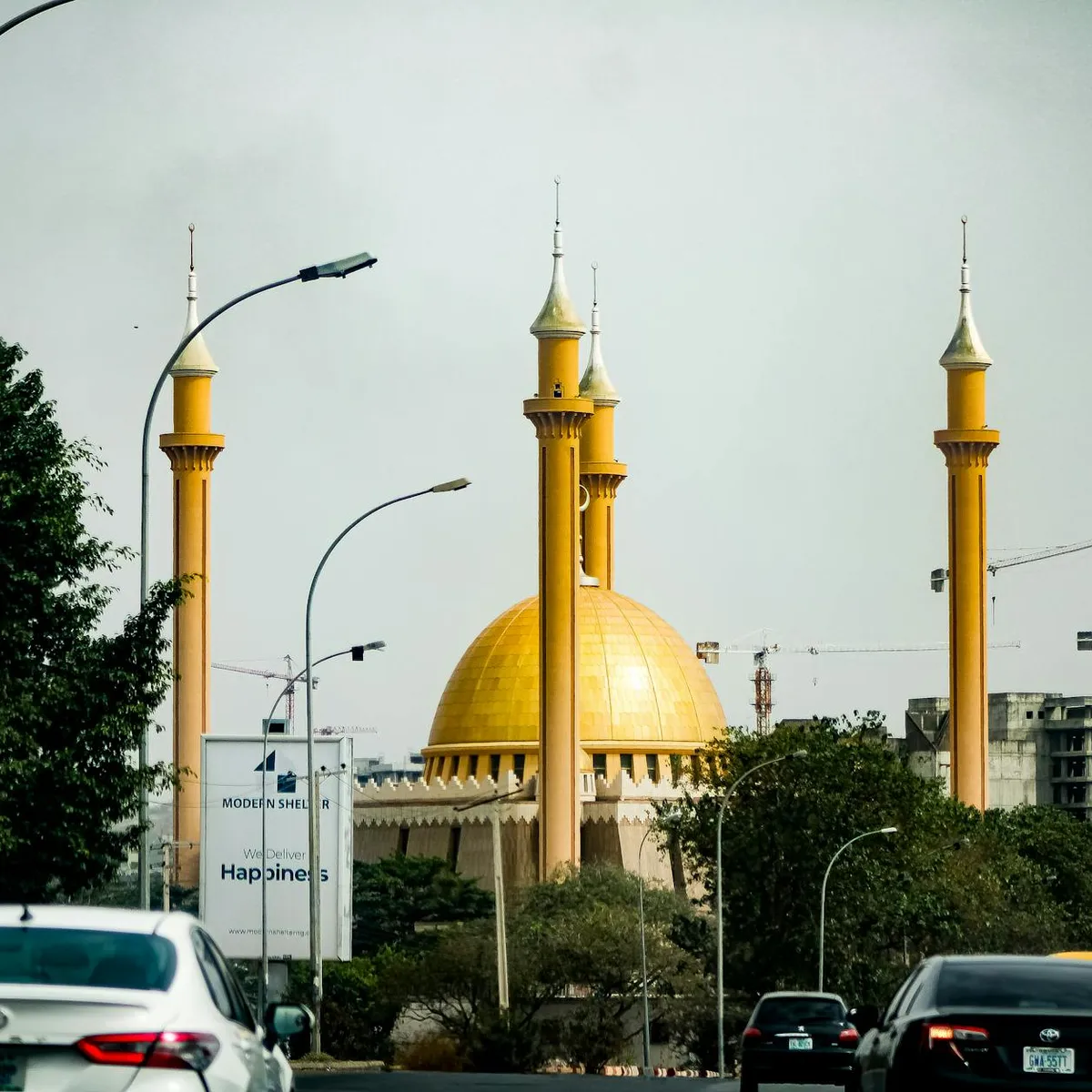
 Photo: Blessing Niniola / Pexels
Abuja
Abuja accessibility for wheelchair users
Compare Abuja by accessibility, transport, terrain, healthcare, cost, weather, laws, reviews, and community notes.
Abuja accessibility scores
Compare Abuja by accessibility, transport, terrain, healthcare, cost, weather, and laws. General stats use public data and models. Community rows reflect member reviews and votes.
General stats
National benchmarks and estimates — your experience in this city may differ.
Community
Starts from our estimate — thumbs up nudge toward Excellent, down toward Poor. Reviews use 1–5 stars.
These figures combine public statistics, models, and live weather where available. Every city is different — treat this as a guide, and share what you know in the Reviews & Corrections tab.
Profile last updated 6/30/2026.
Abuja wheelchair accessibility guide
Research Abuja for wheelchair users and caregivers: getting around, terrain, healthcare, costs, climate, accessible things to do, and practical caveats before booking.
Last updated 6/30/2026At a glance
Abuja is Nigeria's planned federal capital, with wide avenues, government districts, major hotels, and recognizable landmarks. It still scores modestly in RollVenture: overall 45, accessibility 27, wheelchair transport 28, and hilly terrain. Compared with many Nigerian cities, Abuja may offer more controlled compounds and higher-end accommodation options, but it is not automatically wheelchair accessible. Budget from about ~$1,860/mo, with housing from ~$739/mo, then add private transport, backup power, and care support.
Getting around
Use private cars, hotel cars, or vetted ride-hailing drivers. Public buses and informal transport should not be assumed usable with a wheelchair. Nnamdi Azikiwe International Airport is outside the central districts, so arrival planning matters: request airport assistance, confirm step-free pickup, and make sure the vehicle can carry equipment. Within town, cluster activities by district because distances are larger than they appear and roadside pedestrian infrastructure is uneven.
Terrain & mobility
Abuja was planned with broad roads, but the DB terrain profile is hilly, with sampled grades over 6% and only moderate flat-sample coverage. Pavement data is low confidence and mixed: asphalt, paved, unpaved, and many untagged ways. The biggest access contrast is between private compounds, malls, hospitals, and hotels, which may have ramps or elevators, and ordinary roadside routes, which may lack curb cuts or safe crossings.
Healthcare & care
OpenStreetMap leads in the DB include NOOWA Hospital, Eye Foundation Hospital, Bridge Clinic, Diagnoroy Consult, and a primary health-care center. Abuja also has a broader private medical market than smaller cities, but every facility still needs direct access checks. Ask about emergency intake, elevator/ramp access, imaging, specialist referrals, and whether an attendant can stay. Home-aid cost is modeled around ~$389/mo; agency reliability and training should be confirmed before committing to a long stay.
Costs & housing
Accessible housing is more plausible in Abuja than in many smaller cities, especially in newer apartments or serviced hotels, but it is expensive and uneven. Prioritize elevator backup power, ramped parking-to-lobby route, bathroom dimensions, water reliability, generator/inverter, and district safety. Maitama, Wuse, Garki, Asokoro, Jabi, and central business areas can reduce travel time depending on appointments.
Climate & comfort
Abuja is hot with a pronounced rainy season. Rain can expose drainage and shoulder problems; dry-season dust can affect respiratory comfort and chair maintenance. Air conditioning, shaded waiting areas, and reliable charging are important.
Accessible things to do
Millennium Park— A major Abuja green space; verify path surfaces, toilets, and parking before visiting, and go with help if rolling long distances.
Abuja National Mosque— A central landmark; confirm visitor timing, parking, and step-free access arrangements in advance.
National Christian Centre— Another prominent landmark; access details should be checked before events or visits.
Jabi Lake / Jabi Lake Mall area— A practical leisure district with indoor options nearby; verify mall lifts, ramps, and drop-off points.
Community & language
English is widely useful in formal settings; Hausa and other Nigerian languages are common in daily life. Abuja's expat, NGO, government, and business communities can make support easier to find than in smaller cities.
Would we recommend it?
Yes, cautiously, as one of the more workable Nigerian bases if you can afford private transport and verified lodging. It is still a support-heavy destination, not a place to assume independent street-level wheelchair mobility.
These figures combine public statistics, models, and live weather where available. Every city is different — treat this as a guide, and share what you know in the Reviews & Corrections tab.
Profile last updated 6/30/2026.
Reviews & corrections
Share your experience or suggest a data correction. Both appear publicly; admin updates official city scores and costs separately.
Log in to write a review or suggest a correction.
No reviews or corrections yet.