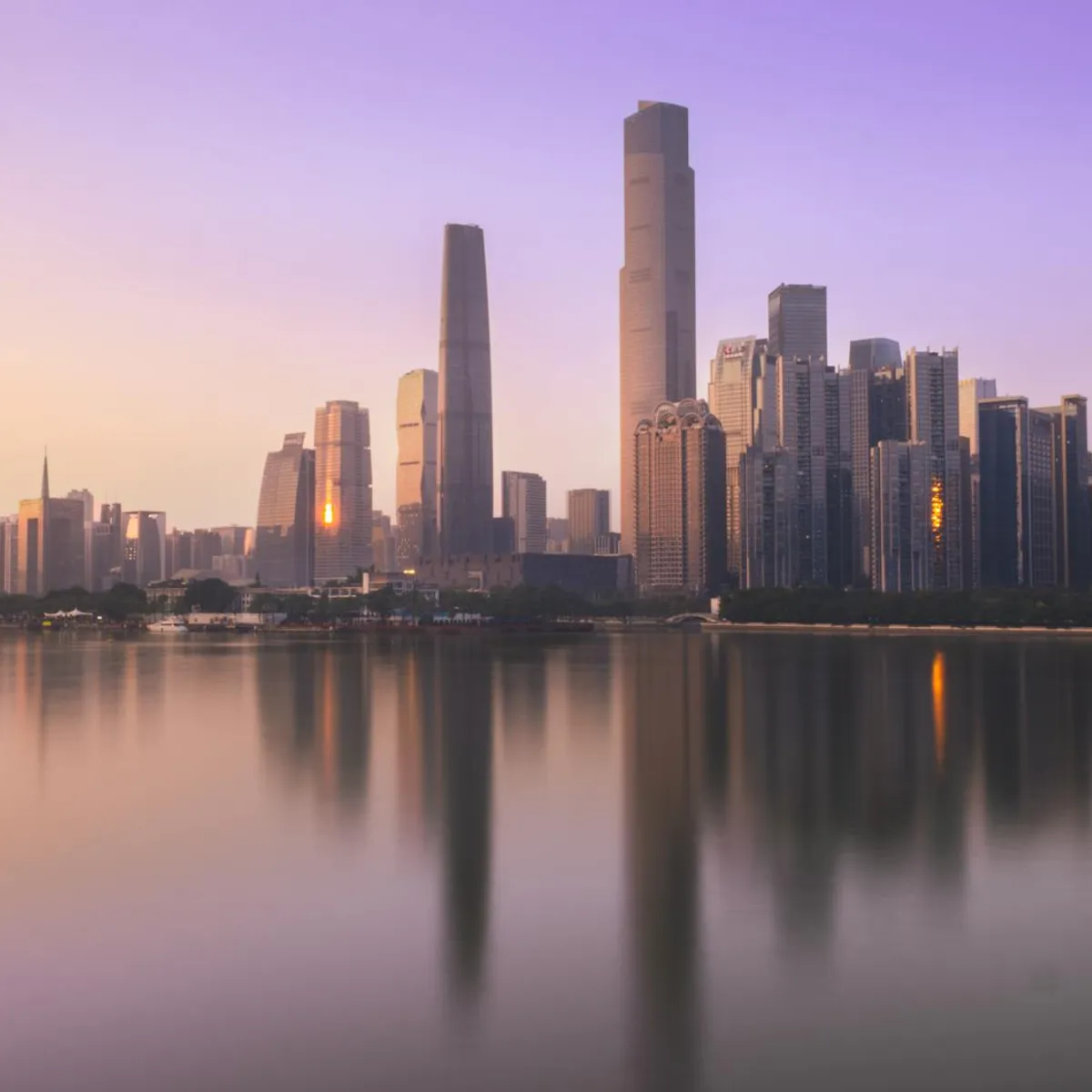
 Photo: jiahua zhou / Pexels
Guangzhou
Guangzhou accessibility for wheelchair users
Compare Guangzhou by accessibility, transport, terrain, healthcare, cost, weather, laws, reviews, and community notes.
Guangzhou accessibility scores
Compare Guangzhou by accessibility, transport, terrain, healthcare, cost, weather, and laws. General stats use public data and models. Community rows reflect member reviews and votes.
General stats
National benchmarks and estimates — your experience in this city may differ.
Community
Starts from our estimate — thumbs up nudge toward Excellent, down toward Poor. Reviews use 1–5 stars.
These figures combine public statistics, models, and live weather where available. Every city is different — treat this as a guide, and share what you know in the Reviews & Corrections tab.
Profile last updated 6/30/2026.
Guangzhou wheelchair accessibility guide
Research Guangzhou for wheelchair users and caregivers: getting around, terrain, healthcare, costs, climate, accessible things to do, and practical caveats before booking.
Last updated 6/30/2026At a glance
Guangzhou is a major, humid, fast-moving city where wheelchair access is best around metro-connected business districts, newer malls, riverfront promenades, and large attractions. RollVenture’s score is mixed: strong infrastructure, hilly classification in the wider sample, low OSM pavement confidence, and wheelchair transport at a moderate level. That means Guangzhou can work well for a prepared visitor, but it is not a “just roll anywhere” city.
Getting around
Guangzhou Metro is the first transport layer to plan around; the official metro site confirms the system, but travelers should verify elevator access and station works for each trip. Taxis or ride-hailing are useful for the last mile, especially during heavy rain. Avoid transfers that require long surface walks across wide intersections unless a local contact or hotel has checked the route.
Terrain & mobility
The central river and commercial districts feel manageable, while older neighborhoods, footbridges, and side streets can add abrupt curb or paving problems. The DB terrain sample shows an average elevation near 20 m with a 3.4% max grade, but OSM surface tagging is sparse. Treat major mall-to-metro corridors as the safest default and inspect satellite/street-view style imagery where possible before committing to smaller lanes.
Healthcare & care
OSM healthcare leads include Guangzhou Clinical Critical Care Center, Yuexiu District Maternal and Child Health Hospital, Guangdong Cardiovascular Institute, Aier Eye Clinic, and Guangdong Women and Children’s Hospital within a few kilometers. These are useful location leads, not accessibility guarantees. International visitors should identify a private or international-service hospital before arrival and keep hotel staff involved for appointments.
Costs & housing
Budget from the RollVenture numbers: living costs from ~$2,940/mo, housing from ~$1,412/mo, transport from ~$230/mo, medical from ~$160/mo, and home aid from ~$586/mo. Accessible serviced apartments and newer chain hotels around Tianhe, Zhujiang New Town, or metro interchanges are safer than older walk-up housing. Request real photos of bathroom turning space, shower entry, and elevator dimensions.
Climate & comfort
Heat, humidity, typhoon-season rain, and slippery paving are major comfort factors. Summer trips need indoor backup plans, breathable seating, rain covers, and extra transfer time. Air-conditioned malls are not just conveniences; they are realistic rest points.
Accessible things to do
Guangzhou Metro-connected Zhujiang New Town— A practical modern district for low-friction rolling, with malls, plazas, and river views; check station elevator status before traveling.
Canton Tower area— A high-profile riverfront sight with modern approaches. Confirm current ticketing and lift/queue procedures directly with the operator before visiting.
Guangdong Museum— A major modern museum in the Zhujiang New Town cluster; verify current accessible entrance and loan equipment details before setting out.
Shamian Island— Popular for historic architecture and calmer streets, but curb cuts and paving should be checked locally; it is better as a slow roll than a long-distance transfer day.
Community & language
English is easier in international hotels, hospitals, and tourist sites than in ordinary taxis or small clinics. Cantonese and Mandarin both appear in daily life, so translated addresses matter.
Would we recommend it?
Yes, with conditions. Guangzhou rewards travelers who stay near a modern metro/mall cluster, travel outside peak downpours, and verify elevators. It is less suitable for users who need guaranteed curb-free independent exploration across old districts.
These figures combine public statistics, models, and live weather where available. Every city is different — treat this as a guide, and share what you know in the Reviews & Corrections tab.
Profile last updated 6/30/2026.