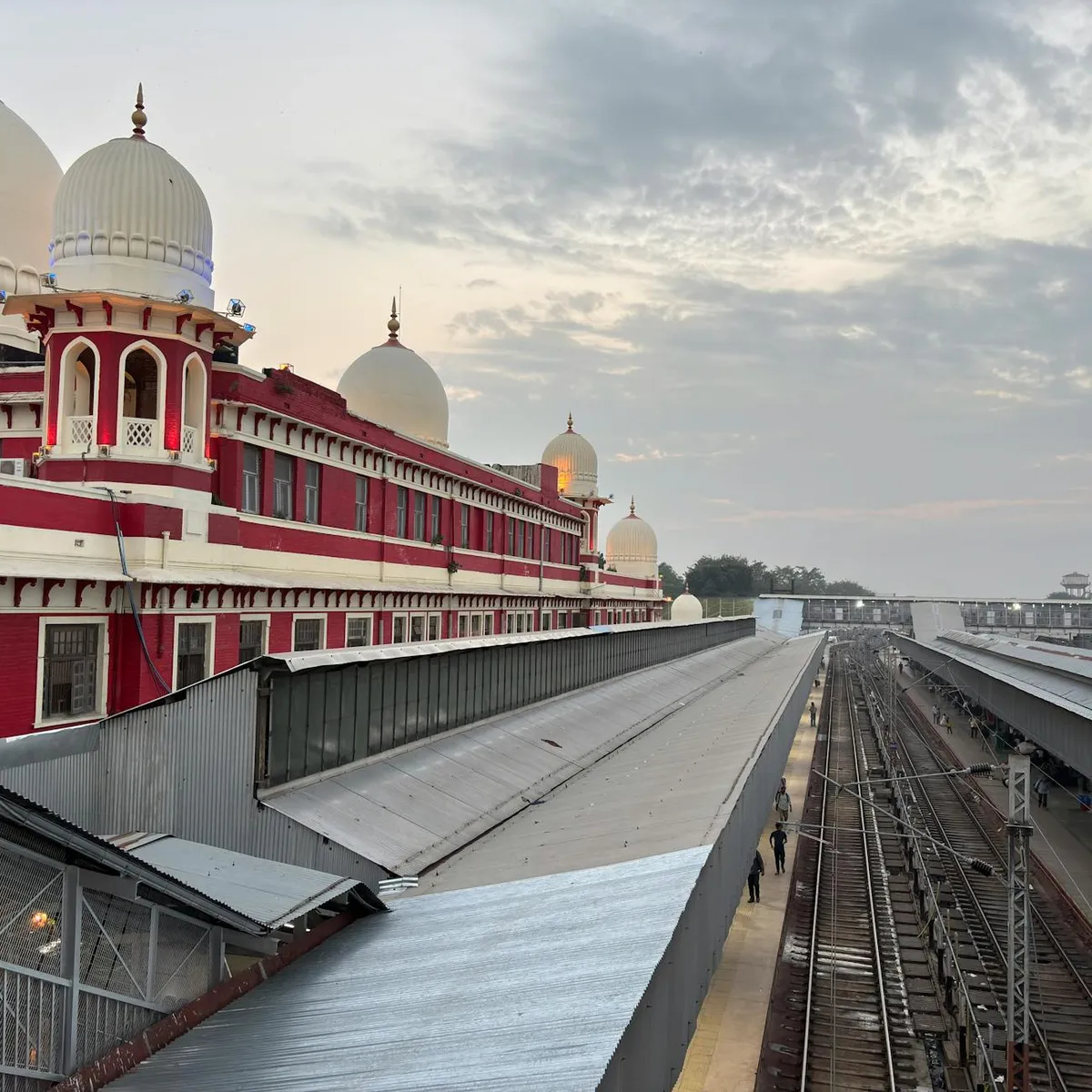
 Photo: Vedant Gupta / Pexels
Lucknow
Lucknow accessibility for wheelchair users
Compare Lucknow by accessibility, transport, terrain, healthcare, cost, weather, laws, reviews, and community notes.
Lucknow accessibility scores
Compare Lucknow by accessibility, transport, terrain, healthcare, cost, weather, and laws. General stats use public data and models. Community rows reflect member reviews and votes.
General stats
National benchmarks and estimates — your experience in this city may differ.
Community
Starts from our estimate — thumbs up nudge toward Excellent, down toward Poor. Reviews use 1–5 stars.
These figures combine public statistics, models, and live weather where available. Every city is different — treat this as a guide, and share what you know in the Reviews & Corrections tab.
Profile last updated 6/30/2026.
Lucknow wheelchair accessibility guide
Research Lucknow for wheelchair users and caregivers: getting around, terrain, healthcare, costs, climate, accessible things to do, and practical caveats before booking.
Last updated 6/30/2026At a glance
Lucknow offers strong culture, food, medical depth, and relatively flat terrain, but wheelchair accessibility is inconsistent and often depends on the exact venue entrance. RollVenture's row shows a low accessibility score of 26, a mostly flat terrain profile, high-confidence paved-surface data, and estimated living costs from ~$1,635/mo. Compared with many north Indian cities, the flatter terrain helps; compared with a mature accessible destination, curb cuts, toilets, heritage thresholds, and transport remain the hard parts.
Getting around
Uttar Pradesh Metro Rail Corporation operates the Lucknow Metro, and official operator information should be your first stop for station facilities, elevators, and platform access. Metro corridors can reduce traffic exposure, but only if the last mile is manageable. For door-to-door travel, use larger app cabs or a hired driver; auto-rickshaws and cycle rickshaws are usually transfer-dependent. Avoid tight old-city lanes at peak hours unless you have an assistant and a clear drop-off plan.
Terrain & mobility
The DB terrain profile is favorable: mostly flat, average elevation around 115 m, and only a small sampled elevation range. Pavement data is unusually strong for this batch, with high confidence and mostly paved/asphalt samples. That does not mean barrier-free. Street encroachments, parked vehicles, drainage cuts, and missing curb ramps can still break routes, especially around Chowk, Aminabad, and heritage sites.
Healthcare & care
The DB healthcare leads include Command Hospital, Ajanta Hospital & IVF Centre, Sadbhavna Medical and Trauma Centre, Raj Chandra Hospital and Research Centre, and Mansarovar Eye Hospital. These are OSM-derived leads and should be verified for current services, step-free entry, and emergency capability. Lucknow is a large medical market, so private consultations, diagnostics, and pharmacy access are generally easier than in smaller towns.
Costs & housing
Use from ~$1,635/mo as a baseline, with stored housing around ~$724/mo. For accessibility, prioritize Gomti Nagar, Hazratganj, and newer apartment corridors over older dense neighborhoods. Confirm lifts, backup power, bathroom width, entrance ramps, and whether the street outside floods or becomes blocked by parked vehicles.
Climate & comfort
Lucknow has hot summers, a humid monsoon, and cooler winters. Heat can be exhausting for wheelchair users, and monsoon puddling makes street crossings harder. Winter and early spring are the most comfortable windows for heritage visits.
Accessible things to do
Lucknow Metro station-to-station outing— Use the metro as a controlled mobility test; verify lift operation and station toilets on UPMRC/current station information.
Bara Imambara— A flagship UP tourism heritage site, but historic steps, thresholds, and crowds make advance access verification essential.
Rumi Darwaza / heritage drive-by— Best approached as a vehicle-based or short assisted stop rather than assuming smooth independent rolling.
Hazratganj shopping and cafe area— More practical for rest stops and drop-offs than many old-city lanes, though individual shops may still have steps.
Janeshwar Mishra Park or Gomti riverfront sections— Large open public spaces can work for a short roll if you confirm gate access, paths, toilets, and security rules.
Community & language
Hindi and Urdu are central; English is useful in hospitals, hotels, and formal services. India's disability law provides a framework, but enforcement is uneven. Clear, repeated access questions before booking are normal and necessary.
Would we recommend it?
Cautiously yes. Lucknow's flatness and metro help, but low everyday accessibility means a wheelchair user should budget for private transport, assistance, and verified accommodation. It is better for culture-focused travelers with support than for independent rolling.
These figures combine public statistics, models, and live weather where available. Every city is different — treat this as a guide, and share what you know in the Reviews & Corrections tab.
Profile last updated 6/30/2026.
Reviews & corrections
Share your experience or suggest a data correction. Both appear publicly; admin updates official city scores and costs separately.
Log in to write a review or suggest a correction.
No reviews or corrections yet.