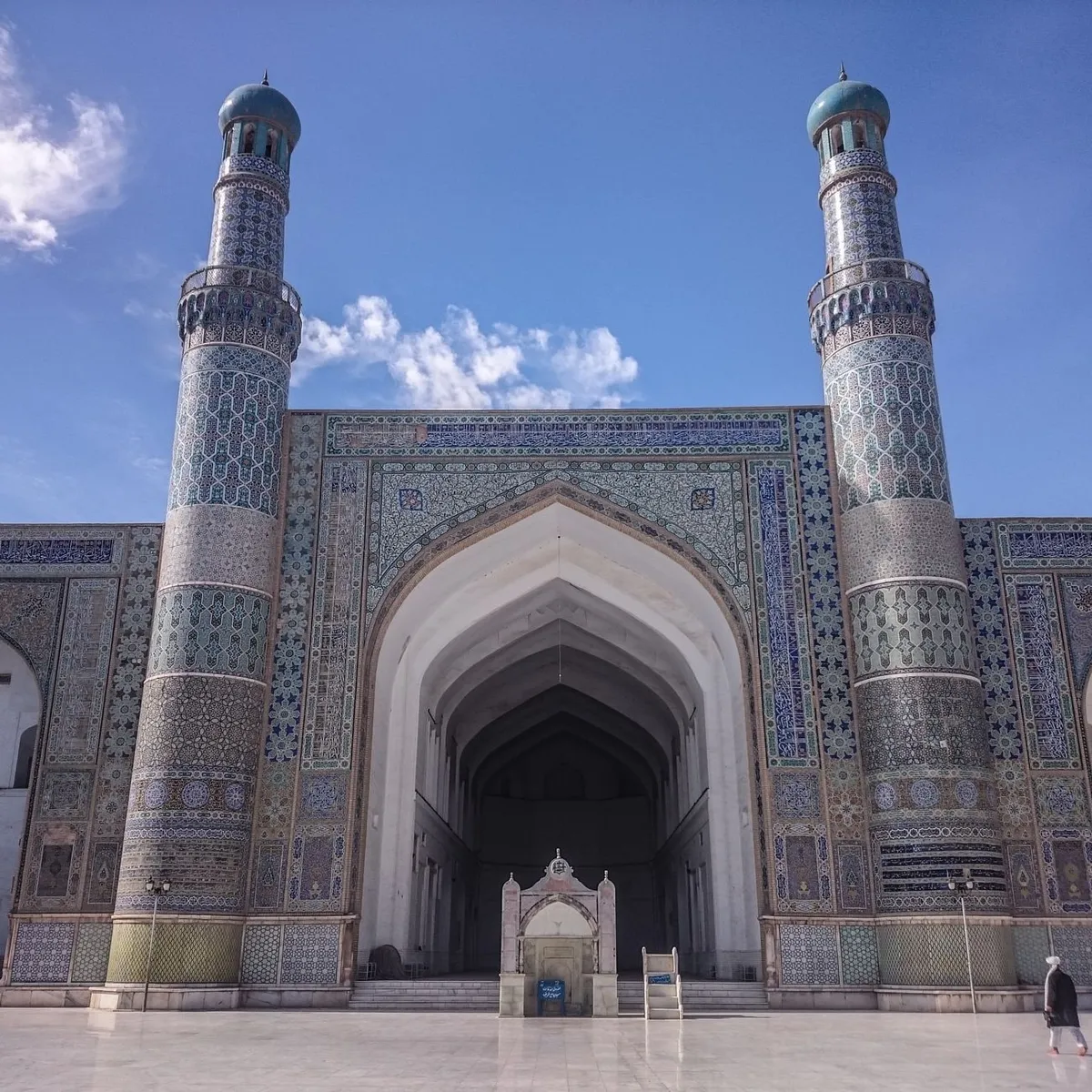
 Photo: Mehdi Khoshnejad / Pexels
Mazār-e Sharīf
Mazār-e Sharīf accessibility for wheelchair users
Compare Mazār-e Sharīf by accessibility, transport, terrain, healthcare, cost, weather, laws, reviews, and community notes.
Mazār-e Sharīf accessibility scores
Compare Mazār-e Sharīf by accessibility, transport, terrain, healthcare, cost, weather, and laws. General stats use public data and models. Community rows reflect member reviews and votes.
General stats
National benchmarks and estimates — your experience in this city may differ.
Community
Starts from our estimate — thumbs up nudge toward Excellent, down toward Poor. Reviews use 1–5 stars.
These figures combine public statistics, models, and live weather where available. Every city is different — treat this as a guide, and share what you know in the Reviews & Corrections tab.
Profile last updated 7/1/2026.
Mazār-e Sharīf wheelchair accessibility guide
Research Mazār-e Sharīf for wheelchair users and caregivers: getting around, terrain, healthcare, costs, climate, accessible things to do, and practical caveats before booking.
Last updated 7/1/2026At a glance
Mazār-e Sharīf is a major northern Afghan city best known for the Blue Mosque / Shrine of Hazrat Ali and as a gateway to Balkh. It should be treated as a high-support, high-caution destination for wheelchair users. The DB row shows a hilly regional profile, low-confidence pavement data, and limited accessibility documentation. Do not present it as an easy relocation base; it is a possible essential-family, work, or carefully hosted cultural stay only with strong local support.
Getting around
Private vehicle support is essential. Do not assume accessible buses, predictable sidewalks, or step-free taxi boarding. Arrange airport or intercity transfers in advance, confirm whether a wheelchair can be carried, and keep daily plans close to lodging. A local host who can call venues and clinics in Dari or Uzbek will make the difference between workable and impossible.
Terrain & mobility
The DB profile labels the wider city hilly, with about 400 m average elevation and maximum sampled grade around 4.1%, even though many sampled points are flat. Pavement confidence is low and dominant surfaces include untagged, asphalt, gravel, and unpaved segments. Expect dust, broken edges, missing curb cuts, and uneven approaches.
Healthcare & care
The OSM healthcare profile lists several central hospital/clinic leads, including Aamoon Ophthalmic Center, the regional hospital, Parween Clinic, and other hospitals within about 1 km, plus Balkh district hospital farther out. Verify operating status, step-free access, medication availability, language support, and emergency transport before arrival.
Costs & housing
DB cost profile: from ~$1,876/mo overall, with housing around ~$993/mo, transport around ~$139/mo, medical around ~$108/mo, and home aid around ~$295/mo. For wheelchair users, the real cost driver is not rent alone; it is finding a secure building with no entrance steps, adequate bathroom space, reliable power, and trustworthy transport.
Climate & comfort
Summers are hot and dusty; winters can be cold. Dust, heat, and unreliable infrastructure can quickly become access issues for people with respiratory, skin, or power-dependent equipment needs. Plan rest days and backup charging.
Accessible things to do
Shrine of Hazrat Ali / Blue Mosque— The main landmark and pilgrimage site. Large open courtyards may be more workable than interior spaces, but crowding, thresholds, security, and restroom access must be confirmed locally.
Central shrine square— A practical low-distance orientation area if security and pavement conditions are acceptable. Go early, with a host, and avoid crowded periods.
Balkh day trip— The nearby historic city is a major cultural excursion. Wheelchair users should treat it as a vehicle-based visit with limited rolling, not a fully accessible archaeological outing.
Local bazaars near the center— Useful for short cultural visits with a companion, but expect narrow aisles, uneven surfaces, and no reliable accessible restrooms.
Community & language
Dari, Uzbek, and Pashto are commonly used; English is limited. A local fixer or family contact is strongly recommended for transport, healthcare, and safety checks.
Would we recommend it?
Only for travelers with a compelling reason, trusted local support, and a conservative plan. The city has meaningful sights, but infrastructure, security, and low accessibility documentation make it unsuitable for casual wheelchair travel.
These figures combine public statistics, models, and live weather where available. Every city is different — treat this as a guide, and share what you know in the Reviews & Corrections tab.
Profile last updated 7/1/2026.