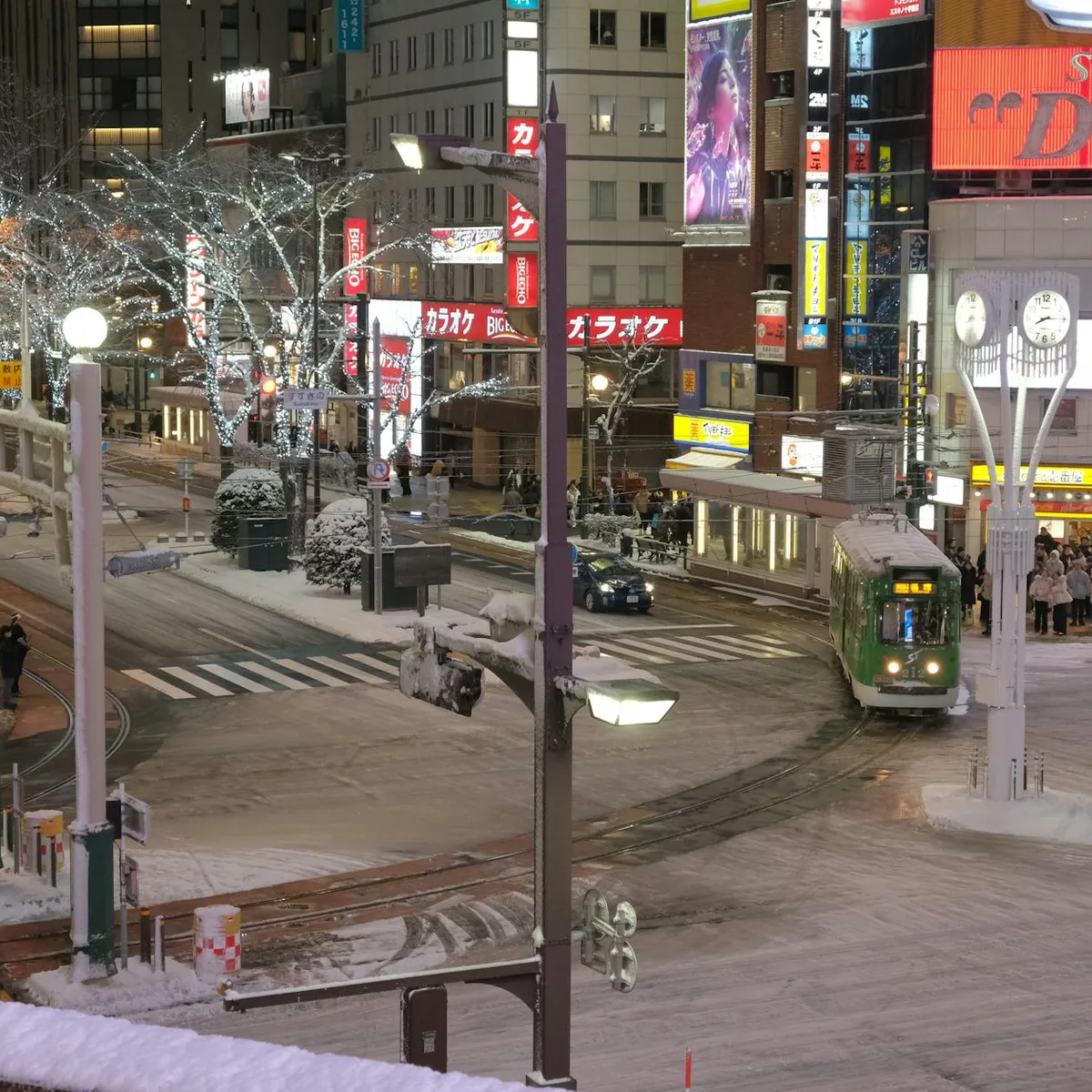
 Photo: Budi N / Pexels
Sapporo
Sapporo accessibility for wheelchair users
Compare Sapporo by accessibility, transport, terrain, healthcare, cost, weather, laws, reviews, and community notes.
Sapporo accessibility scores
Compare Sapporo by accessibility, transport, terrain, healthcare, cost, weather, and laws. General stats use public data and models. Community rows reflect member reviews and votes.
General stats
National benchmarks and estimates — your experience in this city may differ.
Community
Starts from our estimate — thumbs up nudge toward Excellent, down toward Poor. Reviews use 1–5 stars.
These figures combine public statistics, models, and live weather where available. Every city is different — treat this as a guide, and share what you know in the Reviews & Corrections tab.
Profile last updated 6/30/2026.
Sapporo wheelchair accessibility guide
Research Sapporo for wheelchair users and caregivers: getting around, terrain, healthcare, costs, climate, accessible things to do, and practical caveats before booking.
Last updated 6/30/2026At a glance
Sapporo offers strong safety, good urban services, and a distinctive Hokkaido lifestyle, but it is one of the more seasonal accessibility bets in this batch. The DB gives it an overall score of 74, with solid infrastructure and wheelchair-transport signals but low terrain and pavement confidence. Use the estimate as from ~$3,629/mo, with housing from ~$2,004/mo. It can be rewarding for a summer or autumn stay; winter requires a much stricter mobility plan.
Getting around
The official Sapporo tourism transportation page loaded during research and confirms the city is linked from New Chitose Airport by JR rail, airport buses, and other modes. For wheelchair users, the key question is not only whether a route exists, but whether elevators, station staff assistance, snow clearance, and platform transfers work on the day. Central subway corridors can be practical, while buses and taxis may be needed when weather or station geography breaks a route.
Terrain & mobility
The DB terrain sample labels Sapporo hilly, with a high elevation range and low OSM pavement confidence. Downtown blocks can feel manageable, but parks, outer neighborhoods, and winter snowbanks change the experience quickly. Snow Festival season is attractive but physically demanding: packed snow, ice, crowds, temporary barriers, and cold batteries can all affect chair use. Summer paths around Odori and central shopping districts are more forgiving.
Healthcare & care
The stored healthcare profile includes nearby leads such as Hokkaido University Hospital and Sapporo City General Hospital, plus smaller hospitals in the center. Treat OSM entries as location leads only and confirm accessible entrances, appointment language support, and specialty services directly. If you need frequent care, choose housing with reliable winter transport to the hospital, not just a short map distance.
Costs & housing
Sapporo is not Tokyo-priced, but RollVenture's estimate is still from ~$3,629/mo, including housing from ~$2,004/mo. Accessible housing checks should focus on elevator reliability, indoor parking/drop-off, bathroom thresholds, heating, snow-cleared entrances, and whether management clears ramps early enough for appointments. A nominally accessible building can become impractical if the sidewalk approach is icy for months.
Climate & comfort
Climate is the central issue. Winters are long, snowy, and cold; summers are milder than much of Japan and can be comfortable for heat-sensitive travelers. If visiting in winter, plan shorter outdoor segments, backup taxis, battery management, warm gloves that still allow controls, and indoor rest stops.
Accessible things to do
Odori Park corridor— a central orientation route and event space; best in mild seasons, with winter access dependent on snow and crowd management.
Sapporo TV Tower area— a recognizable central landmark close to transit and Odori; verify elevator/ticketing details before visiting.
Hokkaido University area— broad campus routes can be pleasant in good weather; confirm surfaces and building access for specific stops.
Sapporo Station shopping complexes— useful as indoor, transit-linked bad-weather plans; verify elevator routes between levels.
Community & language
Japanese is needed for many local services, though hotels, airports, and major visitor points may offer some English. Bring written Japanese notes for equipment, assistance, allergies, and medication.
Would we recommend it?
Yes for summer/autumn travelers who like safe, well-served cities and can verify routes. For winter wheelchair living, recommend only with strong backup transport, local support, and housing chosen around snow management.
These figures combine public statistics, models, and live weather where available. Every city is different — treat this as a guide, and share what you know in the Reviews & Corrections tab.
Profile last updated 6/30/2026.
Reviews & corrections
Share your experience or suggest a data correction. Both appear publicly; admin updates official city scores and costs separately.
Log in to write a review or suggest a correction.
No reviews or corrections yet.