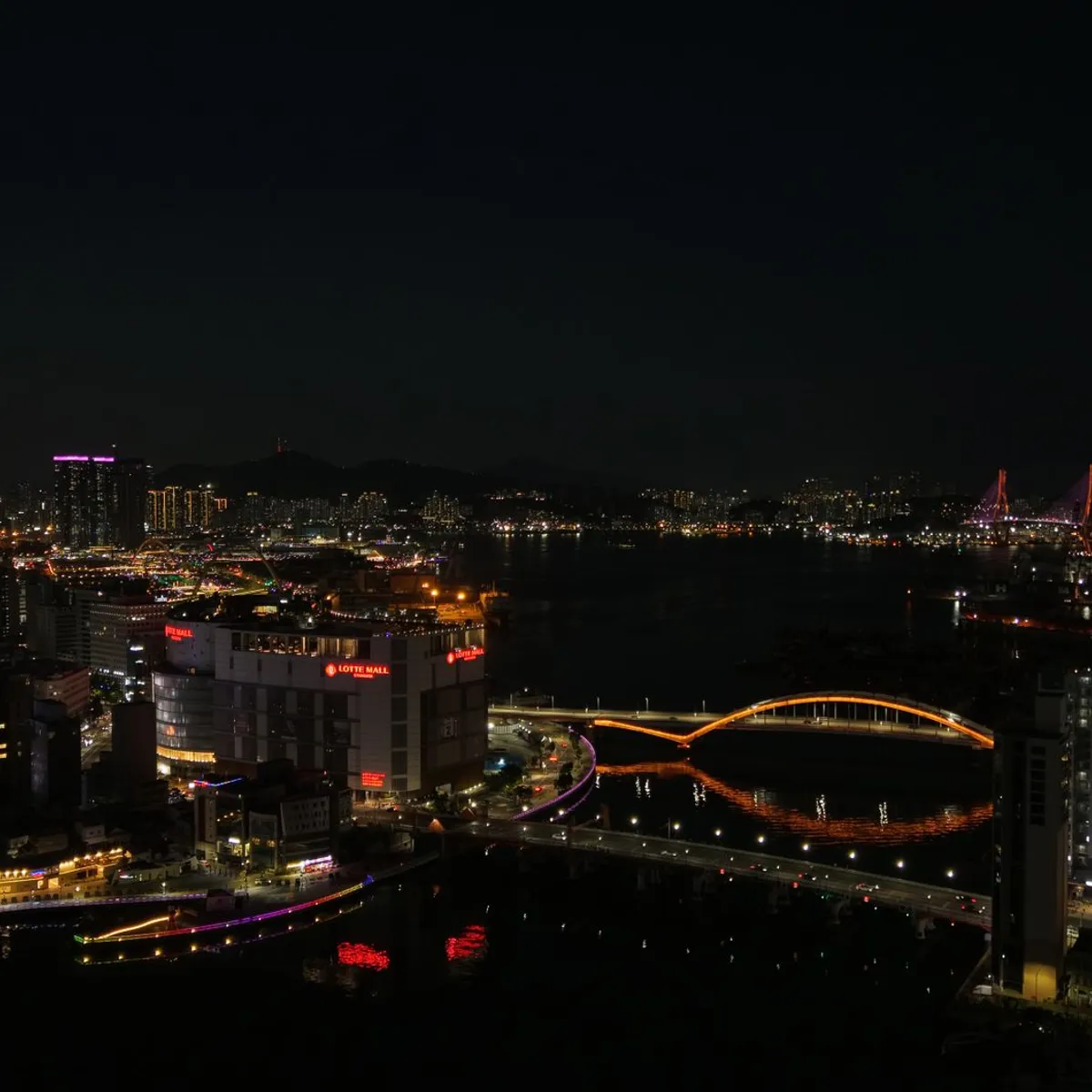
 Photo: Jhany Blue / Pexels
Busan
Busan accessibility for wheelchair users
Compare Busan by accessibility, transport, terrain, healthcare, cost, weather, laws, reviews, and community notes.
Busan accessibility scores
Compare Busan by accessibility, transport, terrain, healthcare, cost, weather, and laws. General stats use public data and models. Community rows reflect member reviews and votes.
General stats
National benchmarks and estimates — your experience in this city may differ.
Community
Starts from our estimate — thumbs up nudge toward Excellent, down toward Poor. Reviews use 1–5 stars.
These figures combine public statistics, models, and live weather where available. Every city is different — treat this as a guide, and share what you know in the Reviews & Corrections tab.
Profile last updated 6/30/2026.
Busan wheelchair accessibility guide
Research Busan for wheelchair users and caregivers: getting around, terrain, healthcare, costs, climate, accessible things to do, and practical caveats before booking.
Last updated 6/30/2026At a glance
Busan offers big-city healthcare, beaches, rail connections, and strong urban infrastructure, but it is a hilly coastal city. The RollVenture profile estimates costs from ~$3,133/mo, with housing around $1,478/mo. It scores well for infrastructure and wheelchair transport, yet the terrain score is low: sampled grades reach about 6.8% and the elevation range is large. The best wheelchair experience is in flatter coastal or newer district areas, not hillside neighborhoods.
Getting around
Busan Metro and city buses are the backbone, but step-free routing must be checked station by station. Elevators, transfer distances, and platform gaps can decide whether a journey is realistic. KTX and intercity rail via Busan Station make Seoul and other cities reachable, but assistance should be booked in advance. Taxis and accessible vans may be needed for steep areas or late-night trips.
Terrain & mobility
The city’s geography is the main challenge: mountains, bridges, slopes, and older hillside streets. Waterfront promenades and newer commercial zones are much easier than older residential lanes. OSM pavement confidence in the DB row is low, so treat street-surface data cautiously and verify actual routes around housing. Rain and typhoon-season winds can make exposed coastal routes harder.
Healthcare & care
The stored healthcare leads are OSM-derived hospitals and clinics, including Inchang Hospital and other central-area facilities, but the names and access details should be verified locally. Busan’s scale means specialist care is more realistic than in small cities, and Seoul is reachable for higher-level referrals. Confirm English-language support, accessible exam rooms, and hospital parking/drop-off before committing.
Costs & housing
Costs are lower than many major U.S. or Western European cities but accessible housing depends heavily on building age. Look for newer elevator apartments near metro elevators, hospitals, grocery delivery, and flat approaches. Ask specifically about bathroom thresholds, wet-room layout, building entrance slope, and backup elevator maintenance.
Climate & comfort
Summers are hot, humid, and rainy; winters are milder than Seoul but still cold enough for comfort planning. Coastal wind, monsoon rain, and typhoon disruption can affect ramps and transit. Air conditioning, covered routes, and nearby indoor errands are important.
Accessible things to do
Haeundae Beach waterfront— broad promenade and tourist infrastructure make it one of the easier outdoor areas; confirm beach-wheelchair or mat availability seasonally.
Busan Museum of Art— modern museum environment; verify elevator access, accessible restrooms, and current exhibition routes.
Busan Cinema Center— large contemporary cultural complex in Centum City; check event seating and lift routes when booking.
Gamcheon Culture Village viewpoint areas— visually important but steep; treat as a scenic drive/taxi stop, not an easy independent roll.
Community & language
Korean is the everyday language. English is more common in hotels, hospitals with international desks, and tourist areas than in ordinary clinics or landlords’ offices. A local helper or Korean-speaking contact is useful for housing inspections and medical scheduling.
Would we recommend it?
Yes, cautiously, for people comfortable with dense Asian cities and careful route planning. Busan can work well from a flat, transit-connected base, but it is not a low-effort wheelchair city because hills and station-by-station access checks are unavoidable.
These figures combine public statistics, models, and live weather where available. Every city is different — treat this as a guide, and share what you know in the Reviews & Corrections tab.
Profile last updated 6/30/2026.
Reviews & corrections
Share your experience or suggest a data correction. Both appear publicly; admin updates official city scores and costs separately.
Log in to write a review or suggest a correction.
No reviews or corrections yet.