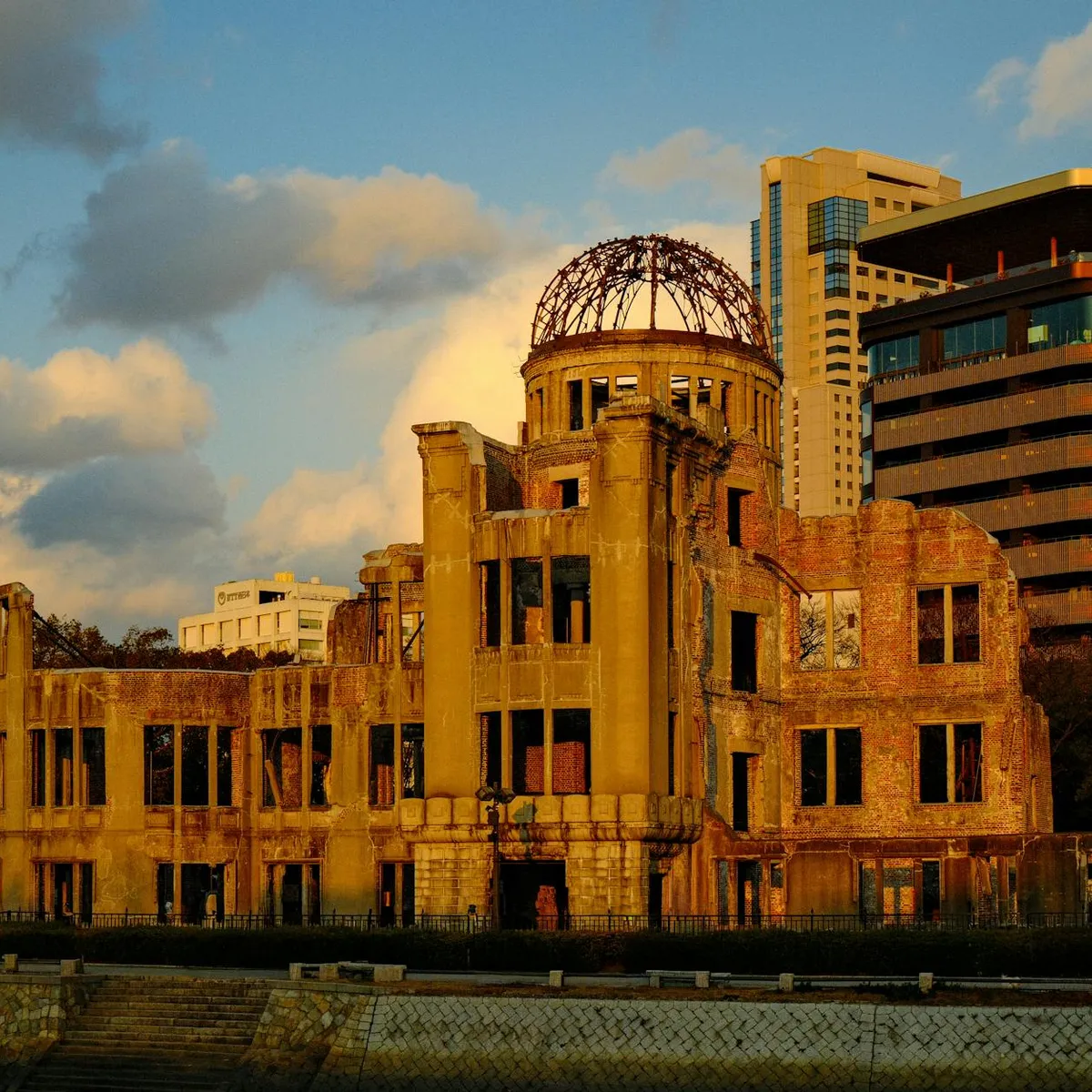
 Photo: Daniel Fabian / Pexels
Hiroshima
Hiroshima accessibility for wheelchair users
Compare Hiroshima by accessibility, transport, terrain, healthcare, cost, weather, laws, reviews, and community notes.
Hiroshima accessibility scores
Compare Hiroshima by accessibility, transport, terrain, healthcare, cost, weather, and laws. General stats use public data and models. Community rows reflect member reviews and votes.
General stats
National benchmarks and estimates — your experience in this city may differ.
Community
Starts from our estimate — thumbs up nudge toward Excellent, down toward Poor. Reviews use 1–5 stars.
These figures combine public statistics, models, and live weather where available. Every city is different — treat this as a guide, and share what you know in the Reviews & Corrections tab.
Profile last updated 6/30/2026.
Hiroshima wheelchair accessibility guide
Research Hiroshima for wheelchair users and caregivers: getting around, terrain, healthcare, costs, climate, accessible things to do, and practical caveats before booking.
Last updated 6/30/2026At a glance
Hiroshima is a strong but not effortless base for wheelchair users who want a major Japanese city with rail, tram, museums, riverfront routes, and day-trip options. RollVenture scores it 74 overall and 72 for accessibility. The central travel experience is best around Hiroshima Station, Peace Memorial Park, Hondori, and the flat river corridors; steeper, hillier edges and older shopfronts need more checking. Use the DB cost baseline as from ~$3,337/mo, with housing from ~$1,768/mo.
Getting around
The safest first plan is to stay near Hiroshima Station, Hondori, or Peace Memorial Park and confirm elevator routes at each JR, Astram Line, and tram stop. Hiroshima Electric Railway is the city tram operator; low-floor cars exist, but not every stop/vehicle pairing is equally easy, so build in time and ask station or hotel staff before committing to a tight transfer. Taxis with ramps should be booked ahead rather than assumed on arrival.
Terrain & mobility
The DB terrain profile is mixed, with sampled hills outside the center and a low OSM pavement-confidence signal. The peace park, museum area, shopping arcades, and river promenades are the friendliest zones. Expect tactile paving, curb cuts, and elevators in main stations, but also occasional narrow sidewalks, bridge approaches, stone surfaces, and small restaurant thresholds.
Healthcare & care
OpenStreetMap lists several hospitals within roughly 1-4 km of the center, but those are leads only. For a longer stay, verify English support, appointment rules, and wheelchair entrance details with the facility directly. Hiroshima is large enough for practical hospital access; personal-care agencies and accessible rentals still require advance Japanese-language coordination.
Costs & housing
Use RollVenture's estimate of from ~$3,337/mo as a planning baseline. Step-free apartments are easiest in newer buildings near major stations, but listings may not describe doorway width, bathroom turning space, or elevator dimensions. Ask for floor plans, photos of the entrance, and confirmation that the route from street to unit has no steps.
Climate & comfort
Summers are hot, humid, and tiring for long chair days; rainy-season routing matters. Winters are relatively manageable, but riverside wind and occasional rain can make transfers uncomfortable. Prioritize shaded museum days and short, flat evening routes in summer.
Accessible things to do
Hiroshima Peace Memorial Museum and Peace Memorial Park— The official museum and tourism sources make this the core accessible anchor; verify current elevator, wheelchair rental, and crowd procedures before visiting.
Hiroshima Orizuru Tower area— A modern central attraction near the Peace Memorial Park, useful as a planned indoor stop; confirm current lift and viewing-area access when booking.
Hondori shopping arcade— A mostly flat, covered central corridor with many food and shopping options; individual shop thresholds vary.
Shukkeien Garden— A historic garden close to the center; paths and bridges can be uneven, so treat it as a partial-access visit and ask staff about the easiest route.
Community & language
English is better in hotels, tourist offices, and major attractions than in clinics or local housing offices. Bring written Japanese notes for transfers, allergies, chair dimensions, and care needs.
Would we recommend it?
Yes, with planning. Hiroshima works best for wheelchair users who can anchor themselves in the flat central district, pre-check tram or taxi transfers, and treat garden or hillside visits as selective rather than spontaneous.
These figures combine public statistics, models, and live weather where available. Every city is different — treat this as a guide, and share what you know in the Reviews & Corrections tab.
Profile last updated 6/30/2026.
Reviews & corrections
Share your experience or suggest a data correction. Both appear publicly; admin updates official city scores and costs separately.
Log in to write a review or suggest a correction.
No reviews or corrections yet.