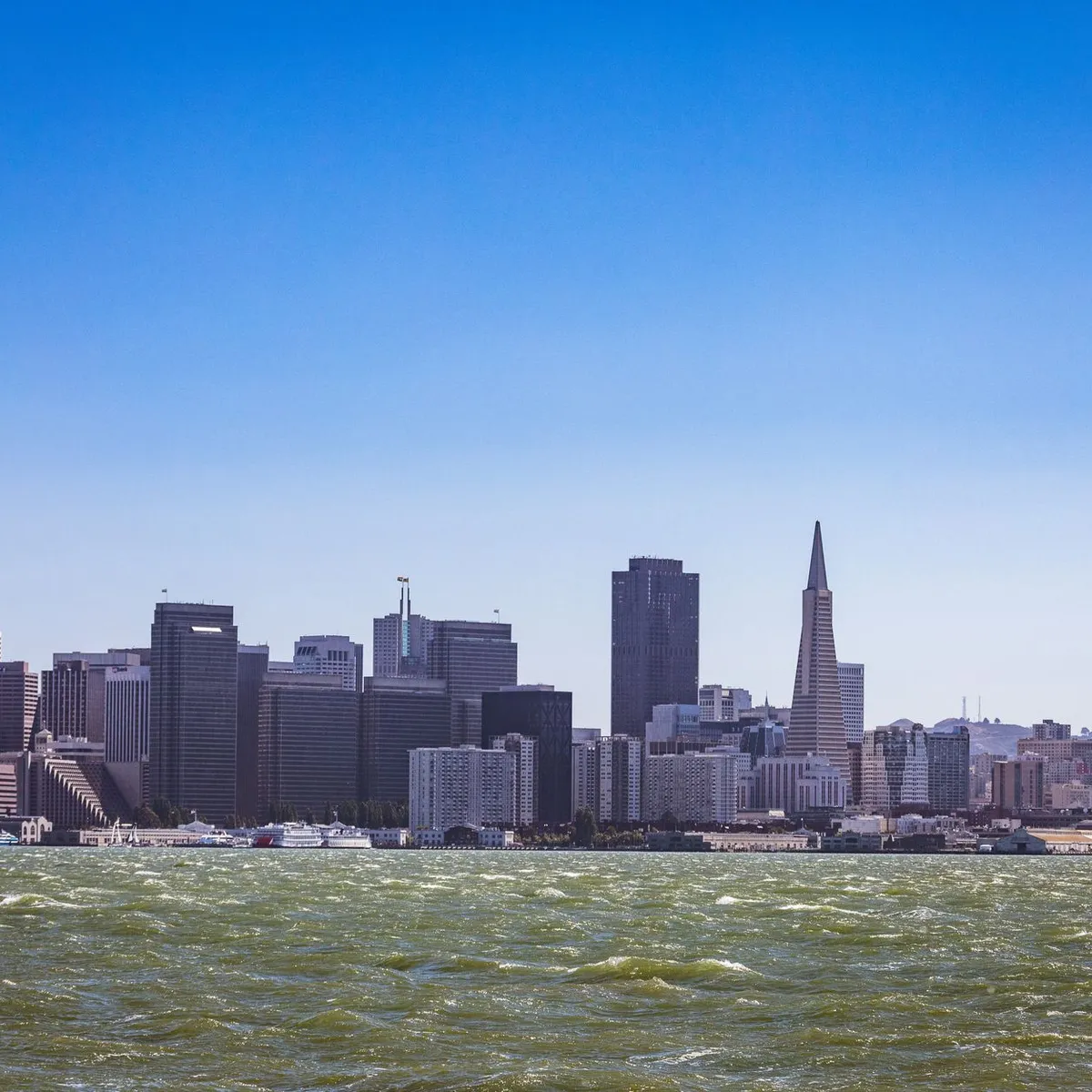
 Photo: Robert So / Pexels
San Francisco
San Francisco accessibility for wheelchair users
Compare San Francisco by accessibility, transport, terrain, healthcare, cost, weather, laws, reviews, and community notes.
San Francisco accessibility scores
Compare San Francisco by accessibility, transport, terrain, healthcare, cost, weather, and laws. General stats use public data and models. Community rows reflect member reviews and votes.
General stats
National benchmarks and estimates — your experience in this city may differ.
Community
Starts from our estimate — thumbs up nudge toward Excellent, down toward Poor. Reviews use 1–5 stars.
These figures combine public statistics, models, and live weather where available. Every city is different — treat this as a guide, and share what you know in the Reviews & Corrections tab.
Profile last updated 6/30/2026.
San Francisco wheelchair accessibility guide
Research San Francisco for wheelchair users and caregivers: getting around, terrain, healthcare, costs, climate, accessible things to do, and practical caveats before booking.
Last updated 6/30/2026At a glance
San Francisco has unusually strong accessible-transit resources for a U.S. city, deep healthcare access, and many world-class attractions, but the terrain is the headline risk. RollVenture’s row scores wheelchair transport highly and records the city’s own slope caveat: flat waterfronts and valleys sit beside steep neighborhoods, with some streets above 20% grade. The stored cost estimate is very high, from ~$6,073/mo, so San Francisco works best for people with a specific reason to be there and enough budget to choose housing carefully.
Getting around
SFMTA’s “Accessibility for All” page describes transportation resources for people with disabilities, including Muni, paratransit, ramp taxis, elevator status, and visitor guidance. That is a major advantage. BART, Caltrain, ferries, and regional buses can expand reach, but elevator outages and hill routing still need daily checks. For a wheelchair user, the best strategy is to live near a flat corridor such as parts of SoMa, Mission Bay, Civic Center, the Embarcadero, or selected Richmond/Sunset routes rather than assuming short map distances are easy.
Terrain & mobility
The city is mixed in the strongest sense: some waterfront and park routes are pleasant, while nearby streets can be exhausting or unsafe for manual chairs. Pavement confidence is high, but many surfaces are untagged/asphalt/concrete and curb ramps vary by block. Wind, fog, rail tracks, steep curb cuts, and driveway cross-slopes can all affect comfort. Route-test housing approaches at the same time of day you expect to travel.
Healthcare & care
The OSM row lists nearby clinic leads such as SF City Clinic, GoHealth Urgent Care, and One Medical; treat them as access leads only. San Francisco also has UCSF, public health services, rehabilitation specialists, and a large disability-services ecosystem. The challenge is cost and wait time. Confirm insurance, accessible exam equipment, attendant policies, and pharmacy delivery before relocating.
Costs & housing
The database estimate is from ~$6,073/mo, with housing around ~$3,808/mo and home-aid around ~$917/mo. Accessible housing is possible but expensive and competitive. Ask for elevator redundancy, slope from transit to the building, backup power policy, bathroom dimensions, and whether the accessible entrance is the same as the main entrance.
Climate & comfort
The climate is cool and often foggy, which can be easier than hot cities, but wind and damp chill are real. Microclimates matter: the west side can be colder, while eastern neighborhoods are sunnier. Keep layers and rain protection for chair controls.
Accessible things to do
Exploratorium— waterfront museum option; verify current access, seating, and sensory needs before visiting.
Asian Art Museum— central museum near transit; check elevator and accessible entrance details.
SFMOMA— major downtown museum; verify ticketing, elevator, and companion policies.
Golden Gate Park routes— good in selected areas, but hills and distances vary, so pick specific museums/gardens and transit stops.
Community & language
English is dominant, with strong Chinese, Spanish, Filipino, and many other communities. Disability advocacy is visible, and city agencies publish more access information than many destinations.
Would we recommend it?
Yes, but selectively. San Francisco is excellent for transit resources, care depth, and cultural access, yet punishing on cost and hills. Choose it when budget and neighborhood control are strong; avoid it if steep backup routes or high rent would create daily stress.
These figures combine public statistics, models, and live weather where available. Every city is different — treat this as a guide, and share what you know in the Reviews & Corrections tab.
Profile last updated 6/30/2026.
Reviews & corrections
Share your experience or suggest a data correction. Both appear publicly; admin updates official city scores and costs separately.
Log in to write a review or suggest a correction.
No reviews or corrections yet.